| Dimensions Specifications |
| Bag Width |
60 – 400 mm |
Customizable for meat, fish, ready-to-eat foods, pre-prepared meals, and frozen food sizes |
| Bag Height |
100 – 600 mm |
Suitable for small vacuum packaging, household packaging, commercial food packaging, and cold chain delivery packaging |
| Edge Width |
5 – 15 mm |
Seal width can be adjusted according to vacuum strength, product weight, and sealing requirements. |
| Bag body thickness |
70 – 200 μm |
Regular food can choose standard thickness, while meat, fish, bone-containing food and frozen food are recommended to choose thicker, puncture-resistant structures. |
| Bag Structure |
Three-sided vacuum bag, four-sided vacuum bag, flat-mouth vacuum bag, vacuum roll film |
Select based on packaging equipment, filling method, product display, and production efficiency. |
| Material Combinations |
| Clear Vacuum Type |
PA/PE、PET/PA/PE |
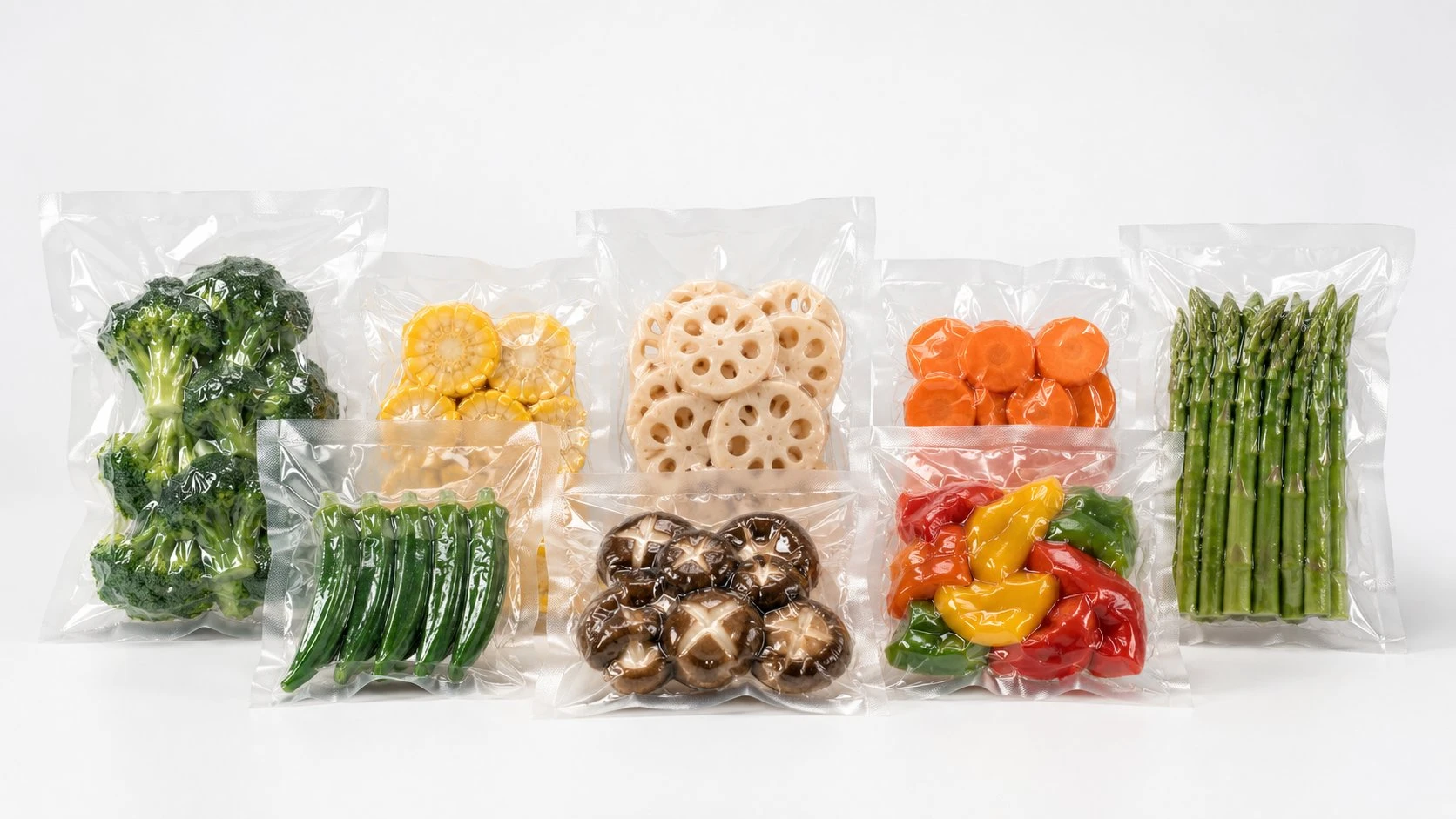
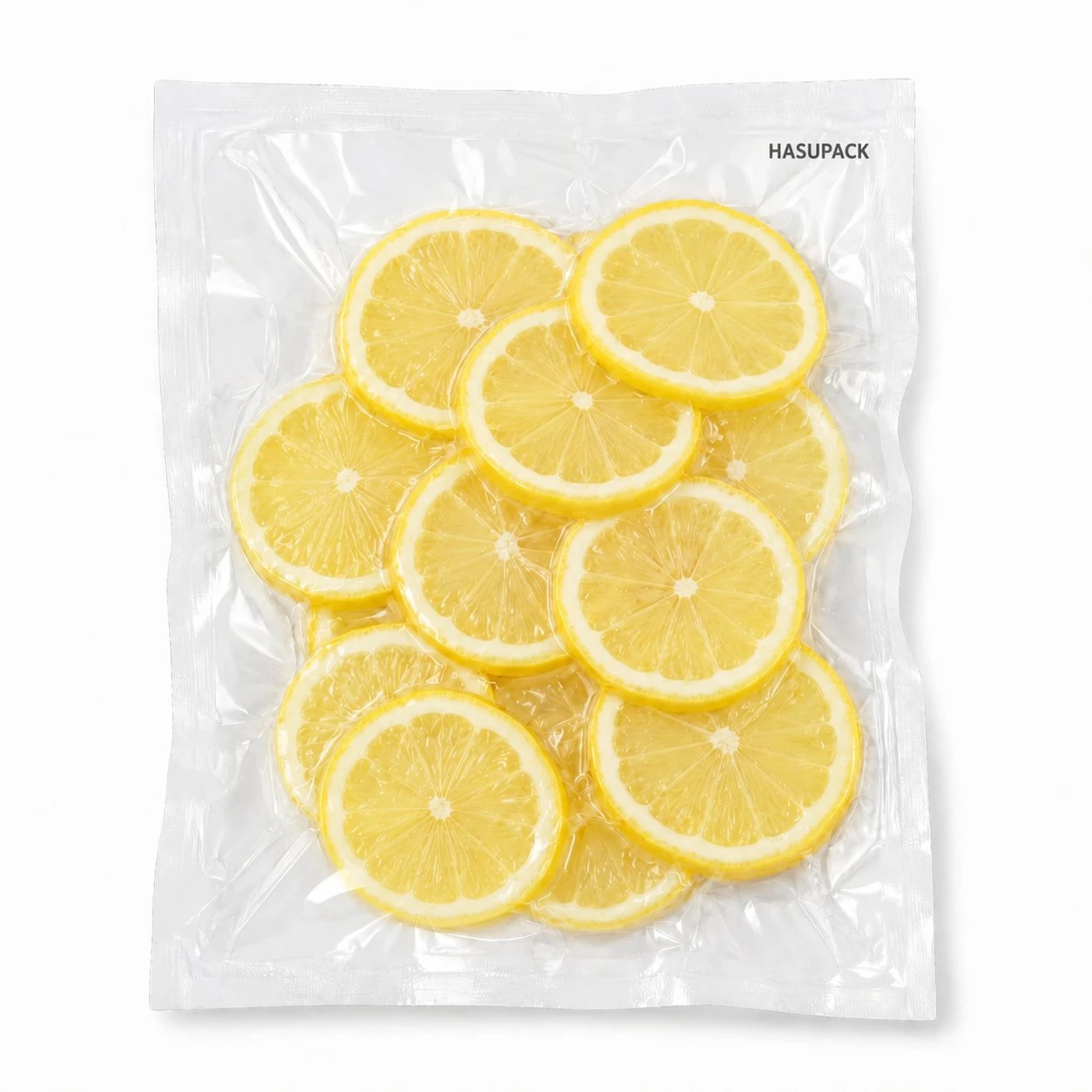
Suitable for transparent vacuum packaging of meat, fish, ready-to-eat foods, frozen products, corn slices, taro slices, lemon slices, etc. |
| Puncture-resistant |
PET/NY/PE、PET/PA/PE |
Suitable for packaging bone-in meats, fish, seafood, freeze-dried foods, and other firm contents |
| Low-temperature resistant type |
PA/PE、PET/PA/PE、PET/NY/PE |
Suitable for refrigerated, frozen food and cold chain transportation packaging, with good flexibility and low-temperature adaptability. |
| High barrier type |
PET/AL/PE、PET/AL/NY/PE、PET/VMPET/PE |
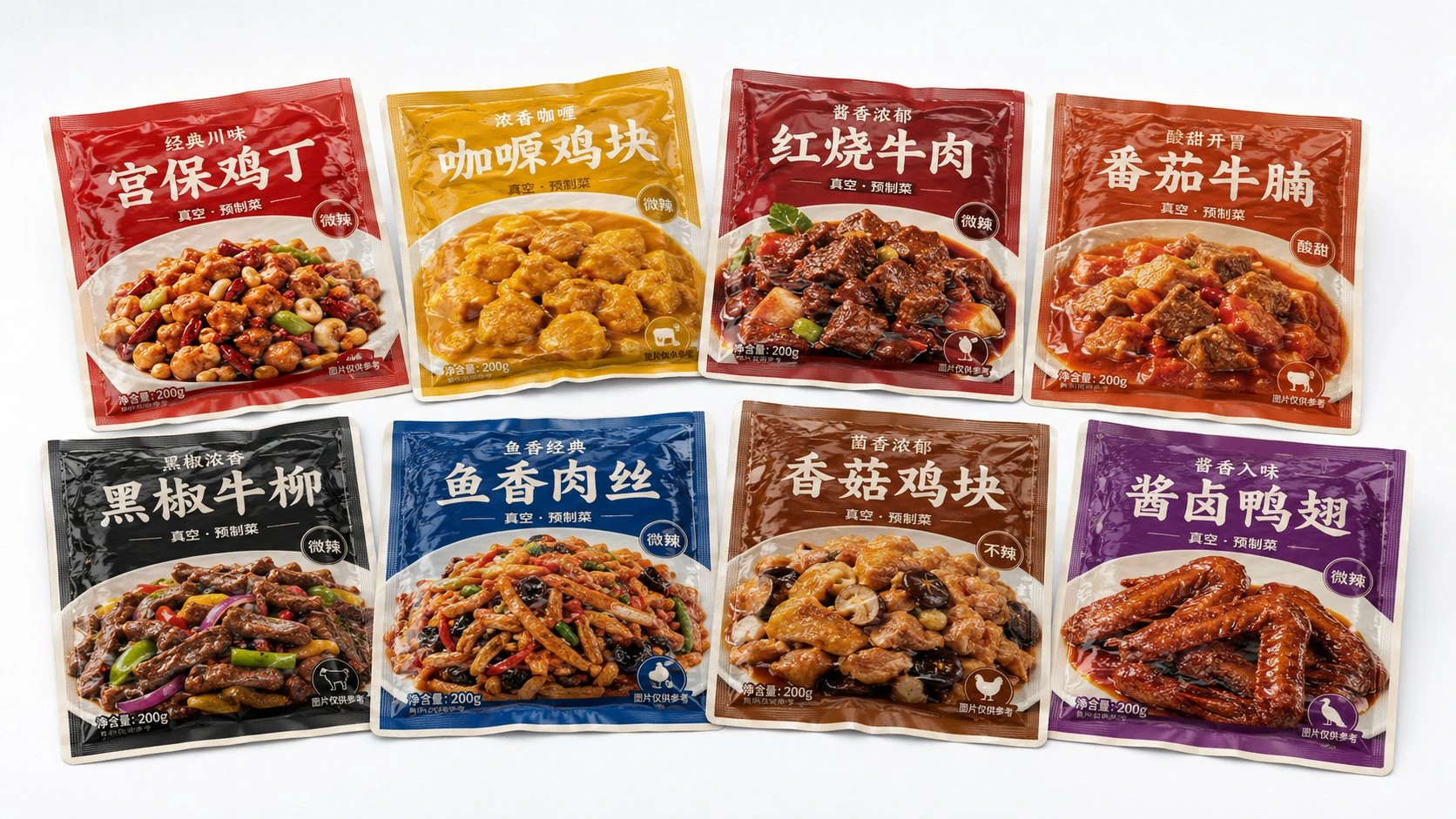
Suitable for packaging of ready-to-eat foods, braised dishes, pre-prepared meals, or high barrier food products that require light protection, oxygen barrier, moisture resistance, and aroma preservation. |
| Transparent Display Type |
PA/PE, PET/PA/PE, clear co-extruded film |
Suitable for vacuum packaging of meat, fish, seafood, and fruits and vegetables that require direct display of the product’s condition |
| Printing and Surface Finishing |
| Printing Process |
Offset printing, digital printing, partial printing |
Printable brand logo, product name, production information, storage instructions, barcode, and nutritional information |
| Print Color Count |
1 – 10 Colors |
Clear vacuum bags can be optionally printed with partial printing, retaining the area for displaying the contents. |
| Surface finish |
Clear, Gloss, Matt, Partial Print, Aluminum Foil, Foil Lamination |
Choose different surface effects based on food display, brand style, and barrier requirements. |
| Clear Window |
Optional |
Aluminum foil or printed vacuum bags can retain localized transparent areas for easy display of the contents. |
| Functional Process |
| Vacuum compatible |
Optional |
Suitable for use with vacuum packaging machines, continuous vacuum equipment, and packaging lines in food factories. |
| Easy-tear notch |
Optional (U-shape / V-shape / Straight) |
Suitable for packaging of ready-to-eat foods, pre-prepared meals, retail foods, and convenience products, enhancing the opening experience |
| Rounded edges |
Optional |
Reduces sharp edges to prevent hand scratches, suitable for retail food, ready-to-eat meals, and portable packaging |
| Puncture-resistant reinforcement |
Optional |
Suitable for products with bones, fish bones, shrimp and crab shells, hard foods, or items subject to high transportation pressure |
| Freezer Compatible |
Optional |
Suitable for frozen meat, frozen seafood, frozen ready meals, and cold chain delivery packaging |
| Applicable Scenarios |
| Meat Vacuum Packaging |
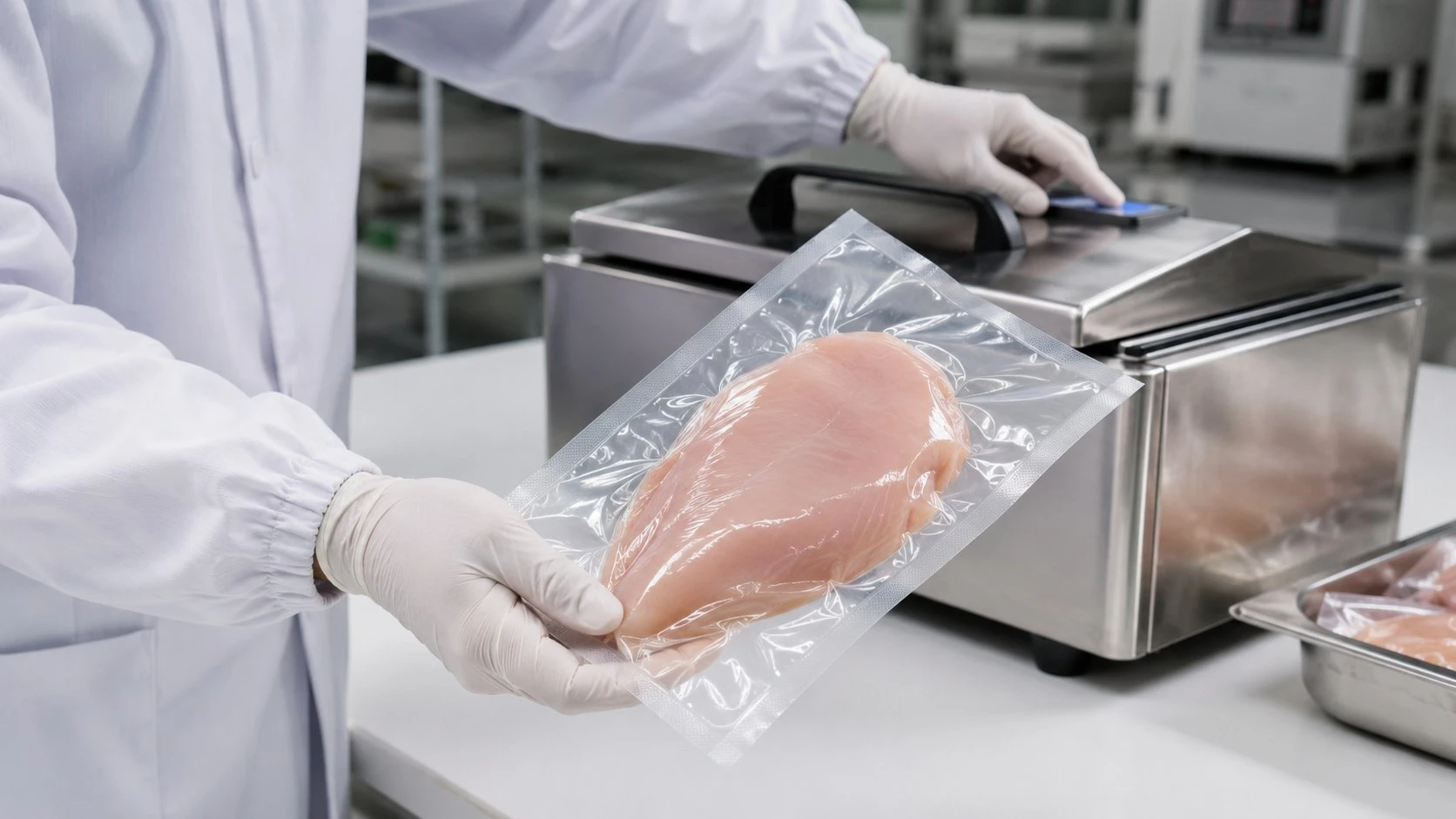
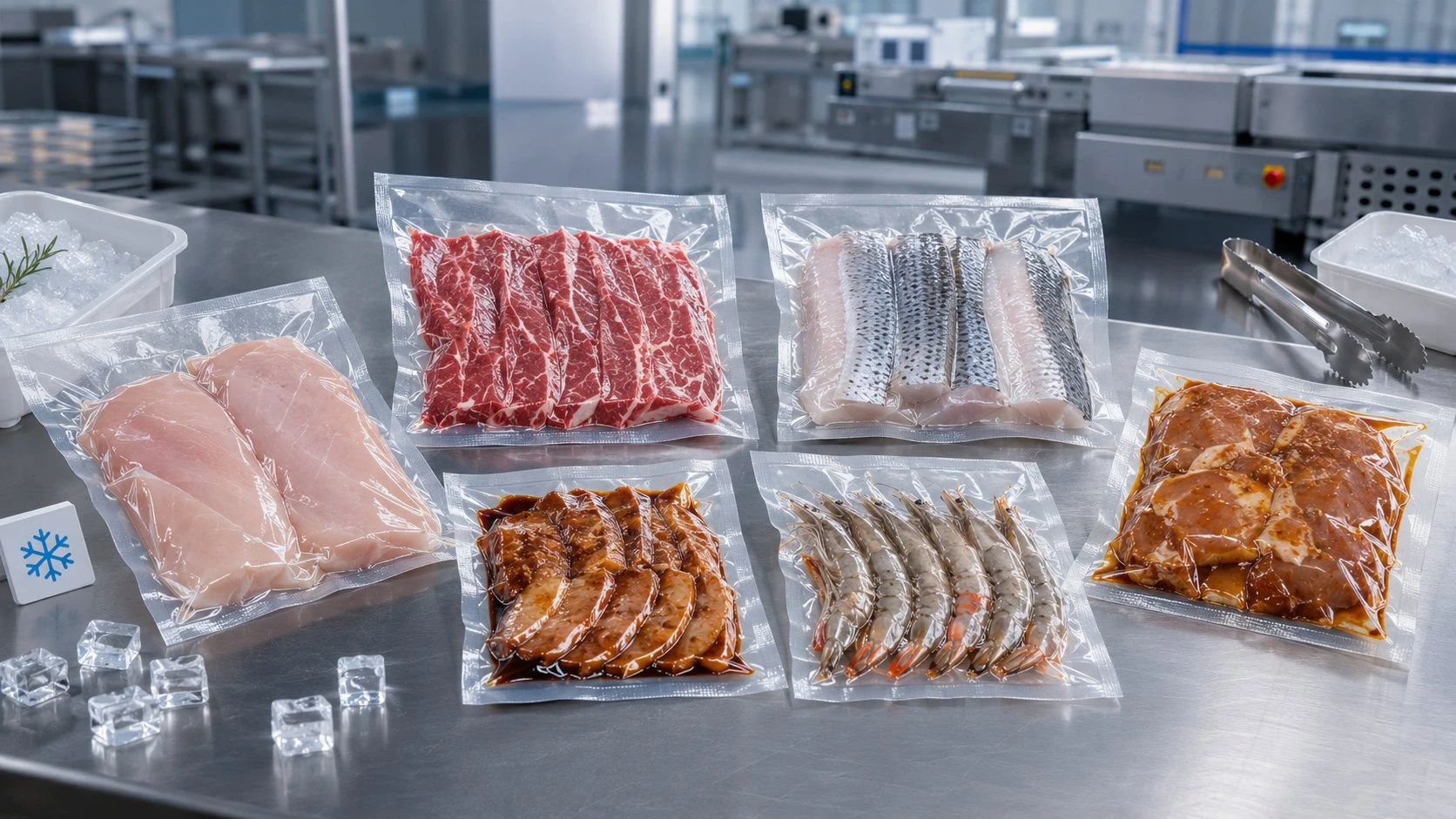
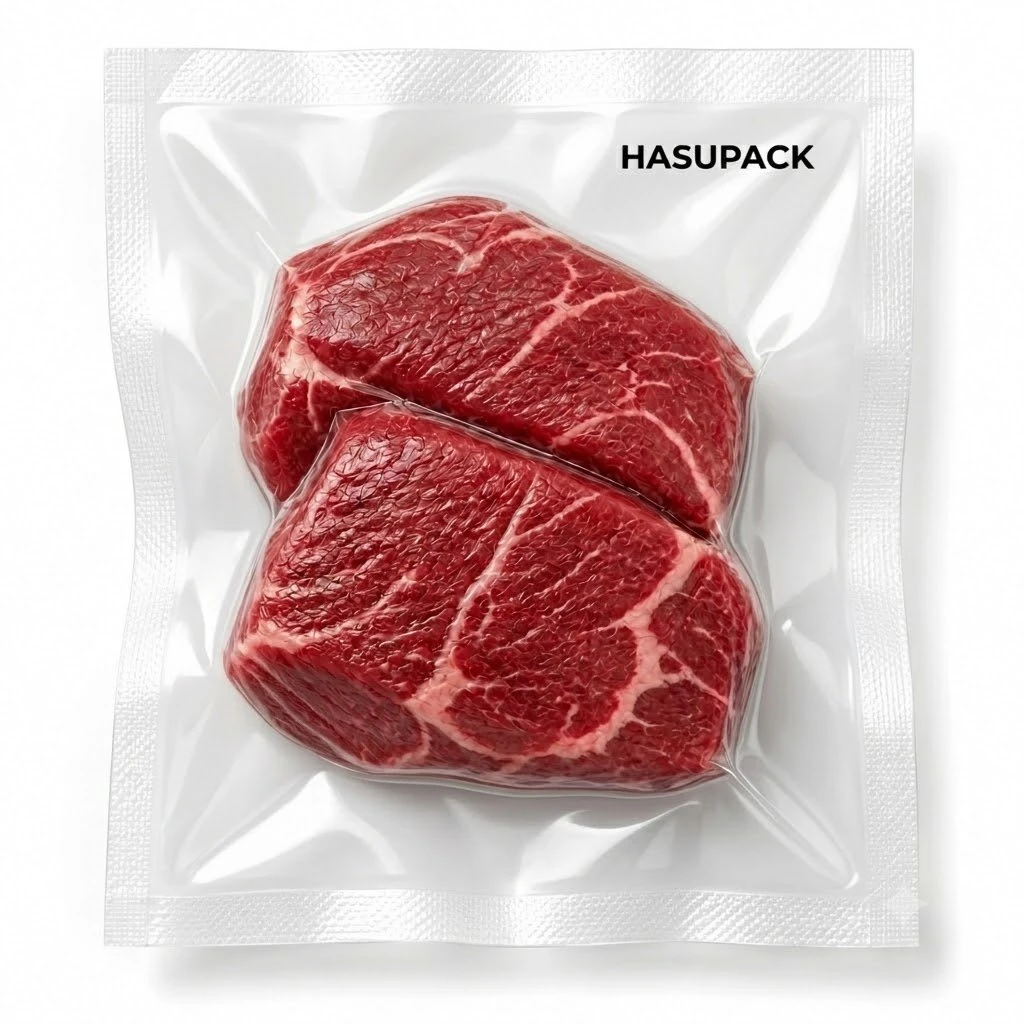
Chicken breast, steak, pork, lamb, bone-in meats |
After vacuum sealing, the bag adheres closely to the surface of the meat, reducing air retention, suitable for refrigeration, freezing, and e-commerce delivery. |
| Fish and Seafood Packaging |
Fish slices, shrimp, crab, shellfish, frozen seafood |
It is recommended to choose puncture-resistant and low-temperature resistant composite films to enhance packaging stability. |
| Processed Meat Packaging |
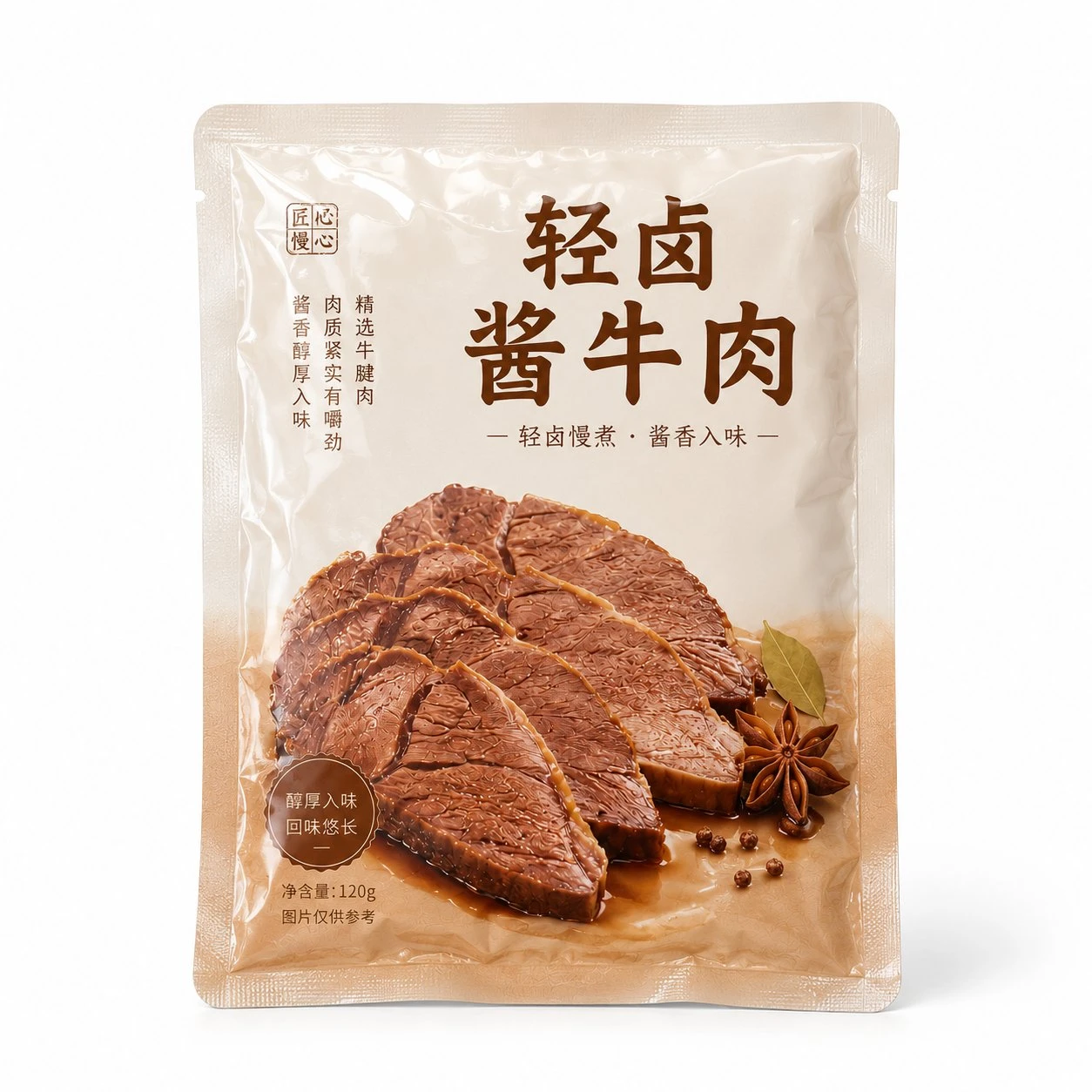
Braised beef, braised beef paste, sausage, ham, braised meat delicacies |
Select transparent vacuum film or high barrier composite film based on shelf life requirements. |
| Ready-to-Eat Vegetable and Fruit Packaging |
Corn pieces, taro slices, lemon slices, pre-made dishes, semi-finished food ingredients |
Suitable for refrigerated display, cold chain transportation, and bulk packaging in food processing plants |
| Vacuum Roll Film Packaging |
Automatic PackagingReel FilmContinuous vacuum packaging |
Suitable for bulk production in food factories, the roll film can be customized in width and film structure according to equipment dimensions. |
| Business Parameters |
| Minimum Order Quantity (MOQ) |
Offset: 5,000 – 10,000 pieces; Digital: 500 – 1,000 pieces |
Minimum order quantity will be adjusted based on size, material, thickness, printing process, and order quantity. |
| Sample lead time |
Digital proof: 3 – 5 days; Print proof: 5 – 7 days |
Recommend confirming dimensions, thickness, material, vacuum sealing effect, and edge sealing strength before mass production. |
| Delivery Lead Time |
First order: 15 – 25 days; reorder: 10 – 15 days |
The specific cycle is determined by the order quantity, material inventory, printing process, and production schedule. |
| Customization Instructions |
Customize based on provided designs, samples, or product dimensions |
We can provide customized packaging solutions based on the shape, weight, refrigeration/freezing requirements, shelf life, and packaging equipment needs of the product. |