




Aluminum foil bags have always been one of the strongest barrier packaging types in flexible packaging. However, many buyers often get stuck at the same question before placing an order: pure aluminum bags and metallized aluminum bags both appear as silver metallic packaging, yet their quotations differ significantly. How should one choose? This article analyzes from four dimensions: material structure, barrier performance, light blocking, and cost.Aluminum Foil BagExplain the selection logic clearly to help brands in food, tea, pet food, and other industries avoid unnecessary detours.
Two Main Structures of Aluminum Foil Bags
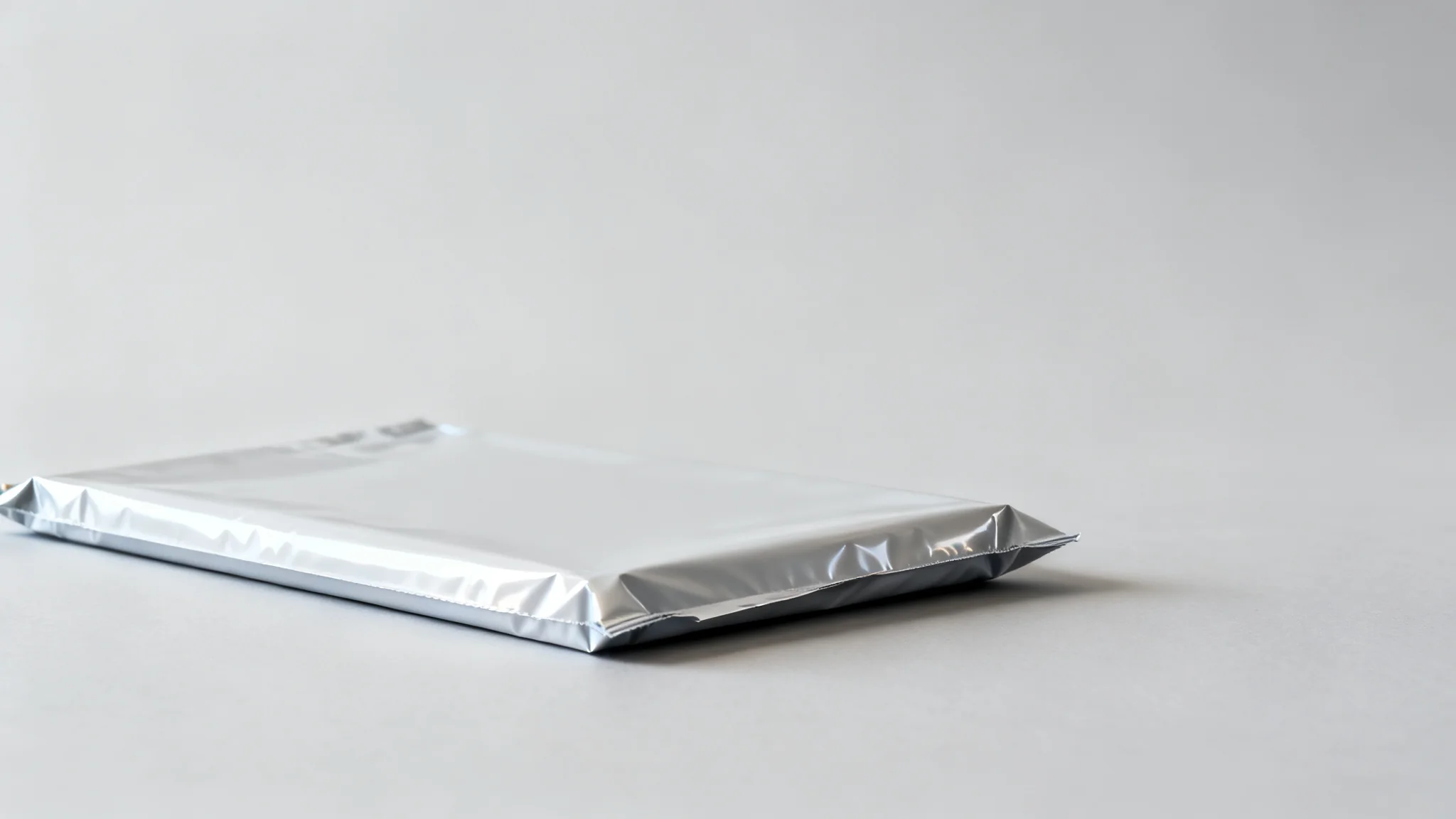
Aluminum foil bags available on the market are actually divided into two categories. The first category is pure aluminum foil bags, with a middle layer of pure aluminum foil typically 7 to 9 micrometers thick, and both sides laminated with composite adhesives to PET, PA, CPP, and other films. Typical structures include PET/AL/CPP or PET/AL/PA/CPP. The second category is metallized bags, with a middle layer of vacuum metallized film (VMPET), where the aluminum layer is only a few hundred angstroms thick. Common structures are PET/VMPET/PE.
Both have a metallic appearance and are reflective. The difference lies in whether the aluminum layer is solid or a coating, which directly determines the ceiling of barrier performance.
The core difference between pure aluminum bags and metallized aluminum bags
In terms of barrier properties, pure aluminum foil can almost completely prevent light, oxygen, and moisture vapor penetration, with an oxygen transmission rate approaching zero. Although metallized films are significantly better than ordinary transparent films, the metallized layer has pinholes and microcracks, leading to a gradual decline in barrier performance over time. In terms of light blocking ability, pure aluminum bags can block almost all visible light and ultraviolet rays, while metallized bags can only partially reflect strong light, leaving light-sensitive oils and pigments at risk of degradation.
In terms of cost, pure aluminum foil is more expensive as raw material, and the composite process is more complex, resulting in a significantly higher unit price compared to a metallized structure. Additionally, the aluminum foil layer is more brittle, making it more prone to creasing during transportation, which affects appearance and shelf appeal.
Which products must be packaged in pure aluminum bags
If the product is sensitive to oxygen and light and requires a long shelf life, there is essentially no alternative to pure aluminum foil bags. Typical applications include high-fat nuts and fried snacks, coffee beans and coffee powder, tea and spices, infant formula, pet freeze-dried and fresh meat food, as well as ready-to-cook meal packs that require high-temperature steaming. These products share a common characteristic: they are extremely sensitive to oxygen and light. Any insufficient barrier protection can lead to off-flavors, discoloration, or clumping.
In contrast, if the product has a low moisture content, a short shelf life is acceptable, and cost and appearance are more important considerations, an aluminum-coated bag is a more practical choice. Examples include ordinary biscuits, candies, personal care samples, and some dried goods.
How to calculate the cost and delivery time
Choosing aluminum foil bags shouldn’t be based solely on unit price. Although pure aluminum structures are more expensive, if they can extend the shelf life from six months to eighteen months, the reduction in returns and losses often far exceeds the packaging cost difference. Dimpled aluminum structures are cheaper, but once oxidation complaints arise, the hidden costs can be even higher. It is recommended to compare three things when purchasing: the barrier cost per unit area, the damage rate during full box transportation, and whether vacuum or nitrogen filling is required. Regarding the relationship between the barrier layer and shelf life, you can refer to our compiled information.Coffee Powder Packaging Barrier Focusas well asDecision Tree for Choosing Packaging Printing ProcessesView the materials and processes together.
5 Things to Confirm Before Placing an Order
First, clarify the product’s oxygen sensitivity and shelf life target; second, confirm whether light protection and high-temperature sterilization are required; third, ask about the aluminum layer thickness and the complete composite structure; fourth, confirm whether structural components such as zippers, air vents, and tear notches affect barrier properties; fifth, request migration and solvent residue test reports. Once these five points are clearly confirmed, the quotation will have comparability and reduce the risk of discovering incorrect choices after sample production.
Three Common Misconceptions
The first misconception is that thicker aluminum layers are always better. Once the barrier performance is already near its limit, increasing the aluminum foil thickness has little effect on shelf life and only raises costs. The second misconception is that metallized bags can fully replace pure aluminum bags. Under strong light and long-term storage conditions, the barrier performance of metallized structures often degrades faster than laboratory data suggests, leading to underestimated risks. The third misconception is to compare only by unit price. In reality, the cost should be evaluated based on the packaging cost per shelf life, taking into account barrier performance, transportation damage, and potential customer complaints in total.
Can aluminum foil bags be frozen or heated?
This depends on the structure rather than the aluminum foil itself. For frozen food packaging, the outer layer is typically made of low-temperature resistant PET or PA, while the inner layer uses low-temperature resistant PE or CPP, allowing stable use below -18°C. For high-temperature sterilization, the inner layer should be replaced with a cast CPP resistant to over 121°C, and a sterilization adhesion test should be conducted. If the product requires both freezing and microwave heating, it must be clearly specified during the sample stage to ensure the composite structure and adhesive meet the requirements of both temperature conditions, rather than trying to fix it later.
If you are looking for an aluminum foil bag solution for products that are sensitive to oxygen and light, welcome to organize your product information and proceed.Contact UsCommunication; you can also visit the Huashu Packaging official website to learn about our complete flexible packaging customization capabilities, or check out the related sites.Om PackagingCross-border packaging solutions.