




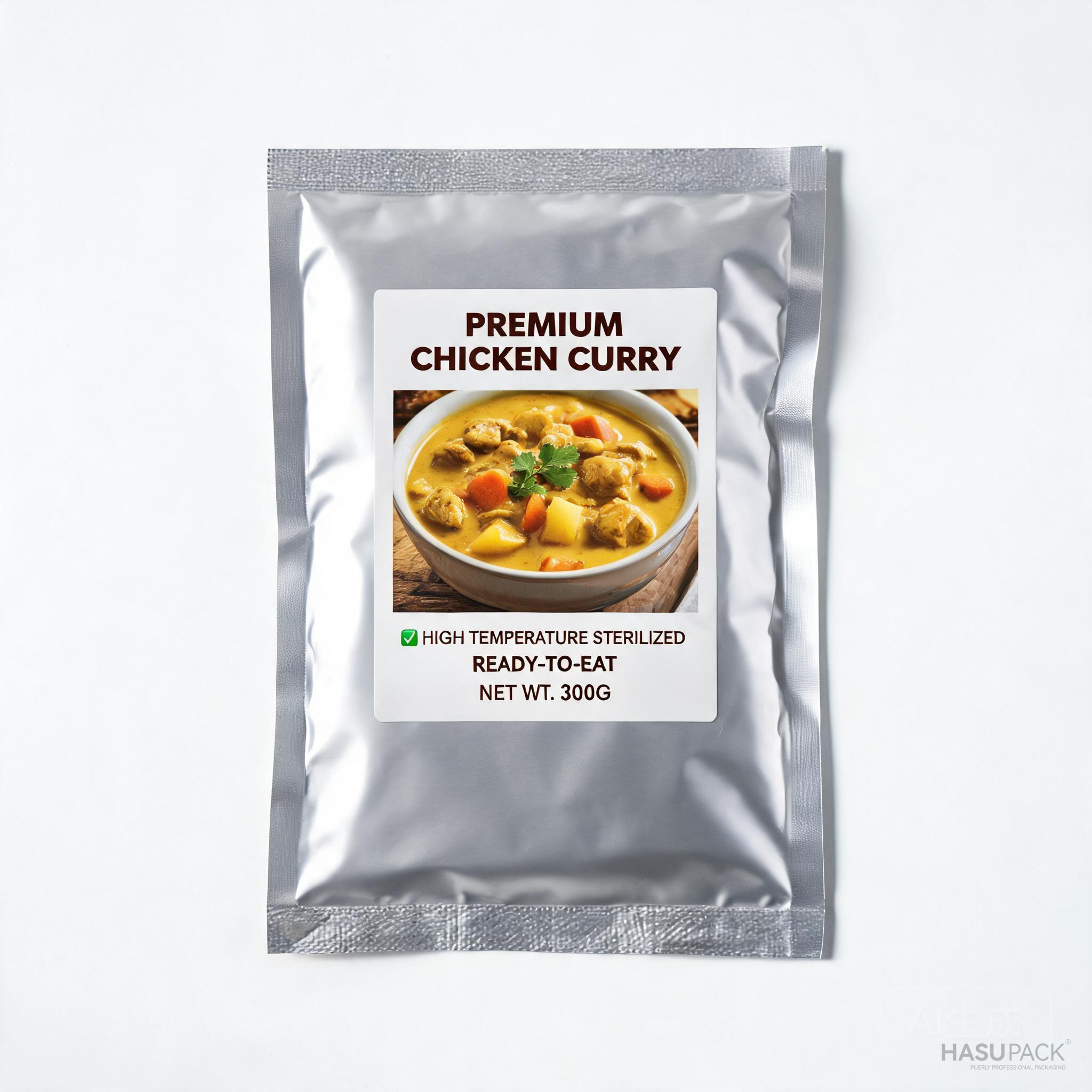
High-temperature steam sterilization bagOne of the most widely used high-temperature sterilization packaging solutions in the food industry, this flexible packaging is essential for products ranging from braised meat products to ready-to-eat dishes and wet pet food. It can withstand sterilization at temperatures as high as 121°C or even 135°C. Many customers often ask: ordinary plastic bags deform and melt when placed in a high-temperature pot, so why can high-temperature steam sterilization bags endure 121°C sterilization? What makes their structure, materials, and manufacturing process special? This article provides a comprehensive explanation from a factory production perspective, covering the principles, materials, applications, and key considerations for selecting high-temperature steam sterilization bags.
Why Can High-Temperature Sterilization Bags Withstand 121°C? The Material and Structure Revealed
High-temperature steam sterilization bags can withstand temperatures up to 121°C, thanks to their multi-layer composite structure. A typical high-temperature steam sterilization bag consists of three layers from the outside to the inside: an outer layer of polyester film (PET), providing stiffness and a printable surface; a middle layer of aluminum foil (AL) or nylon (PA), offering barrier properties and puncture resistance; and an inner layer of cast polypropylene (CPP) or high-density polyethylene (HDPE), responsible for heat sealing and food safety contact. These three layers are bonded together through dry lamination or solvent-free lamination processes. Each layer performs a specific function: PET is heat-resistant and provides excellent printability, AL completely blocks oxygen, light, and moisture, and the CPP heat-sealing layer maintains sealing strength under 121°C steam conditions without delamination or softening.
It is important to note that the adhesives and inks used in high-temperature steam sterilization bags are of high-temperature resistant grade. Ordinary composite bags use adhesives that may hydrolyze at high temperatures, leading to delamination and bulging of the bags. In contrast, high-temperature resistant adhesives are specially formulated to maintain stable adhesion under high-temperature and high-pressure conditions of 121°C for 30 to 40 minutes. This is the fundamental reason why high-temperature steam sterilization bags are more expensive than ordinary composite bags—every layer of material and each type of auxiliary material undergoes strict high-temperature resistance selection. For more information on high-temperature resistant materials, you can refer to our previous articles.High-temperature resistant packaging materials: from 121°C steam sterilization to microwave heating。
Three Types of High-Temperature Steam Sterilization Bags and Their Applicable Scenarios
High-temperature sterilization bags are divided into two main categories based on whether they contain an aluminum foil layer: transparent sterilization bags and aluminum foil sterilization bags. Transparent sterilization bags are made of a composite of PET, PA, and CPP, allowing visibility of the contents, making them suitable for products with general barrier requirements such as ready-to-eat vegetables, preserved eggs, and snacks. Aluminum foil sterilization bags include an aluminum foil layer, achieving the highest level of barrier properties, making them ideal for oxygen and light-sensitive products like meat, fish, and curry that require long-term storage at room temperature. Their shelf life can reach 12 to 24 months. Based on bag shape, common types include three-sided sealed bags, stand-up bags, and gusseted bags. Stand-up sterilization bags also offer good display effects on shelves.
In terms of application scenarios, high-temperature steam sterilized bags almost cover all food categories that require long shelf life at room temperature: Chinese-style ready-to-eat meal packs, fermented meat products, snack-style halved foods, pet wet food, military rations, and emergency food. Compared to frozen food, steam-sterilized food does not require cold chain logistics, significantly reducing storage and transportation costs. This is why high-temperature steam sterilized bags are widely used in chain restaurants and pre-prepared food industries.
Four Key Criteria for Selecting High-Temperature Steam Cooking Bags
First, check the barrier properties. For meat products requiring long-term storage at room temperature, choose a structure with aluminum foil, with an oxygen transmission rate below 5 cubic centimeters per square meter per day. Second, check the heat-seal strength. After steaming, the heat-seal strength should be above 40 Newtons per 15 millimeters to prevent bag rupture during transportation and handling. Third, check the puncture resistance. For products containing bones or frozen-thawed items, select a structure with thickened PA layers to prevent punctures from bones or sharp objects. Fourth, check compliance certifications. High-temperature steamable food packaging bags must comply with the GB 4806 series food safety national standards. The production factory should have the appropriate food packaging production license, and migration test reports may be required upon request.
Summary and Recommendations
High-temperature sterilization bags can withstand 121°C sterilization due to the collaborative performance of multi-layer materials such as PET, aluminum foil, PA, and CPP, along with the support of high-temperature resistant adhesives and inks. When purchasing, do not only focus on the unit price, but also pay attention to four key indicators: barrier properties, heat-seal strength, puncture resistance, and food safety compliance. Choosing the right structure ensures your product achieves long-term preservation at room temperature and ready-to-eat convenience, delivering commercial value.
Need custom high-temperature steamable bags? WelcomeContact Huashu PackagingWe have mature sterilization bag production experience and a complete testing system. For more flexible packaging solutions, visit Om Packaging.