




2025-2026 Plastic Bag Levy Policy Overview
From 2025 to 2026, China’s plastic restriction policy entered a critical phase of comprehensive deepening. National-level policies on plastic pollution control are accelerating implementation. At the local level, provinces and cities have introduced more stringent implementation details. First-tier cities such as Beijing, Shanghai, Guangzhou, and Shenzhen are advancing plastic restriction measures across various sectors. As a national ecological civilization experimental zone, Hainan Province has already achieved the phased goal of a full island plastic ban and has accumulated rich experience in policy implementation.
It is worth noting that new policies regulating the market order of biodegradable plastics were introduced by multiple provinces and cities in the second half of 2025, focusing on cracking down on false labeling of biodegradable performance. At the same time, coastal provinces such as Zhejiang and Jiangsu have accelerated the implementation of plastic restriction legislation, while also introducing fiscal subsidies and tax incentives for environmentally friendly packaging enterprises. Overall, the enforcement of plastic restriction policies is expanding from first-tier cities to second- and third-tier cities, and from the catering and retail sectors to areas such as express delivery, agriculture, and hospitality. The continued expansion of policy coverage means that more enterprises and industries will be directly affected.
Detailed Explanation of Prohibited and Restricted Lists for Key Industries and Products
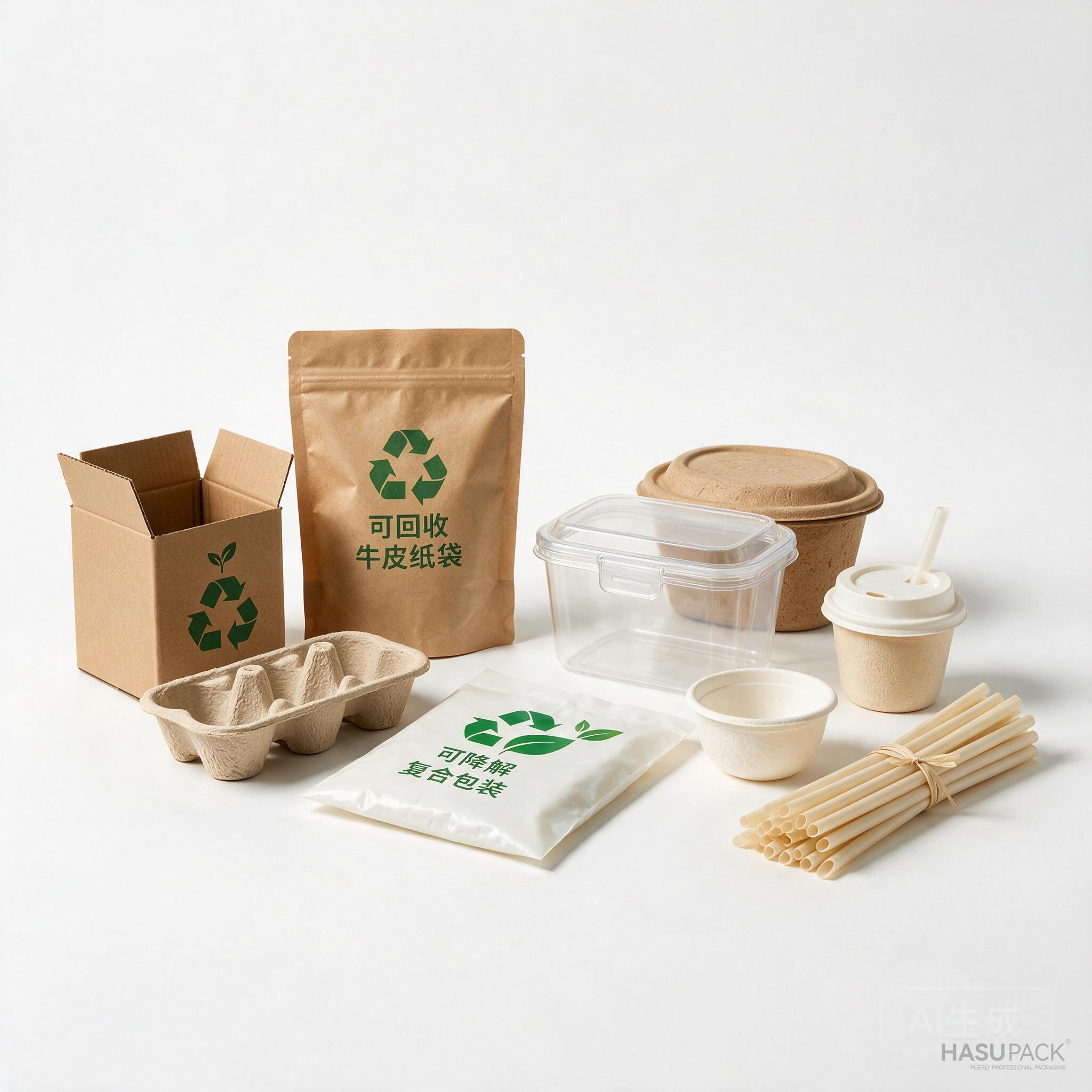
The current focus of the plastic restriction policy is on the following industries and product categories. First, non-degradable plastic bags: the use of non-degradable plastic bags is prohibited in the catering, retail, e-commerce, and food delivery sectors. Alternative options include degradable plastic bags (which must meet the GB/T 38082-2019 standard), non-woven fabric bags, and paper bags. Second, disposable plastic tableware: non-degradable disposable plastic tableware used in the catering industry, including knives, forks, spoons, straws, etc., is prohibited. Alternatives include degradable tableware or reusable tableware. Third, express delivery packaging: the express delivery industry needs to gradually phase out non-degradable plastic packaging bags and adhesive tapes, promoting the use of degradable packaging, reusable packaging, and paper packaging. Fourth, agricultural plastic film: agricultural plastic film must meet the national standard GB/T 35795-2017, and the use of fully biodegradable mulch film is encouraged. For specific technical parameters and performance indicators of degradable materials, please refer to the following.Packaging Knowledge ColumnMaterial Interpretation Article
In addition to the aforementioned main categories, some provinces and cities have expanded their restrictions to other plastic products. For example, Shanghai has included hotel disposable plastic items in its restricted list, such as disposable plastic combs, toothbrushes, and bath caps. Guangzhou has focused on special rectification of non-degradable plastic bags in wholesale markets. Beijing is promoting the greening of express delivery packaging, requiring express companies to increase the proportion of reusable packaging year by year. These diverse regional and sector-specific restrictions form a multi-dimensional network for plastic pollution control. When developing compliance strategies, enterprises need to consider them comprehensively.
Market Landscape and Development Trends of Alternative Materials
The plastic restriction policy has spurred a large market for alternative materials. The main alternative materials currently available in the market include PLA (polylactic acid), PBAT (polybutylene adipate terephthalate), PBS (polybutylene succinate), and PHA (polyhydroxyalkanoates). Among these, PLA is currently the most widely used biodegradable plastic, offering excellent transparency and processing performance, and is mainly applied in rigid packaging and transparent films. PBAT is the preferred material for flexible packaging and is often blended with PLA to improve flexibility and processability. PHA, as the third-generation biodegradable material, has good marine biodegradation performance, but its production cost is relatively high. Starch-based plastics, as the most cost-effective biodegradable solution, have found some applications in areas such as garbage bags and agricultural mulch films.
However, the alternative materials market still faces multiple challenges, including insufficient production capacity, high prices, and performance limitations. Although domestic PLA production capacity has been growing rapidly, it still struggles to meet market demand, with some high-end grades relying on imports. PBAT production has high technical barriers, and product quality stability still needs improvement. At the same time, performance aspects such as heat resistance, barrier properties, and printability of alternative materials still have room for enhancement. For information on Huashu Packaging’s products and services in the field of eco-friendly packaging, please visit our website.Custom Packaging ServicesGet more information.
Corporate Compliance Pathways and Strategic Recommendations
In response to the ongoing tightening of plastic restrictions, food and packaging companies should proactively take the following compliance measures. First, conduct a comprehensive packaging compliance review to verify whether the current packaging materials are listed in the restricted or banned categories, and assess the feasibility and cost of alternative solutions. Second, develop a practical plan for transitioning to eco-friendly packaging, replacing non-degradable materials in stages and by category, with priority given to high-risk product types. Third, establish partnerships with certified eco-friendly packaging suppliers to ensure that alternative materials meet national standards for biodegradability. It is recommended to request third-party test reports as verification.
Fourth, establish an internal policy tracking mechanism, assign dedicated personnel to collect and analyze the latest plastic restriction policies in various provinces and cities, ensuring that the company’s compliance work does not have any blind spots. Fifth, actively participate in work meetings and training sessions organized by industry associations and government departments to understand the latest policy trends and industry best practices. It is worth noting that compliance is not only a legal requirement but also an important way for enterprises to fulfill social responsibilities and enhance their brand image. An increasing number of end consumers pay attention to the environmental attributes of packaging when choosing products, which provides differentiated market positioning opportunities for companies actively transitioning. To learn more about Huashu Packaging’s eco-friendly product line, please visitAbout HuaShuGet more information.
China’s plastic restriction policy is transitioning from a single-use limitation approach to a comprehensive management of plastic pollution. Looking ahead, several key trends are worth noting. First, the classification and recycling system for plastics will become more sophisticated, and recyclability design for packaging will become a basic compliance requirement. Second, the producer responsibility extension system will be fully implemented in the field of plastic packaging, requiring packaging manufacturers to take responsibility for the environmental impact throughout the product’s entire lifecycle. Third, digital traceability systems will be introduced into plastic packaging management, enabling tracking at every stage from raw materials to final disposal. Fourth, international cooperation will be further strengthened, with China actively participating in the development and implementation of global plastic pollution governance agreements.