




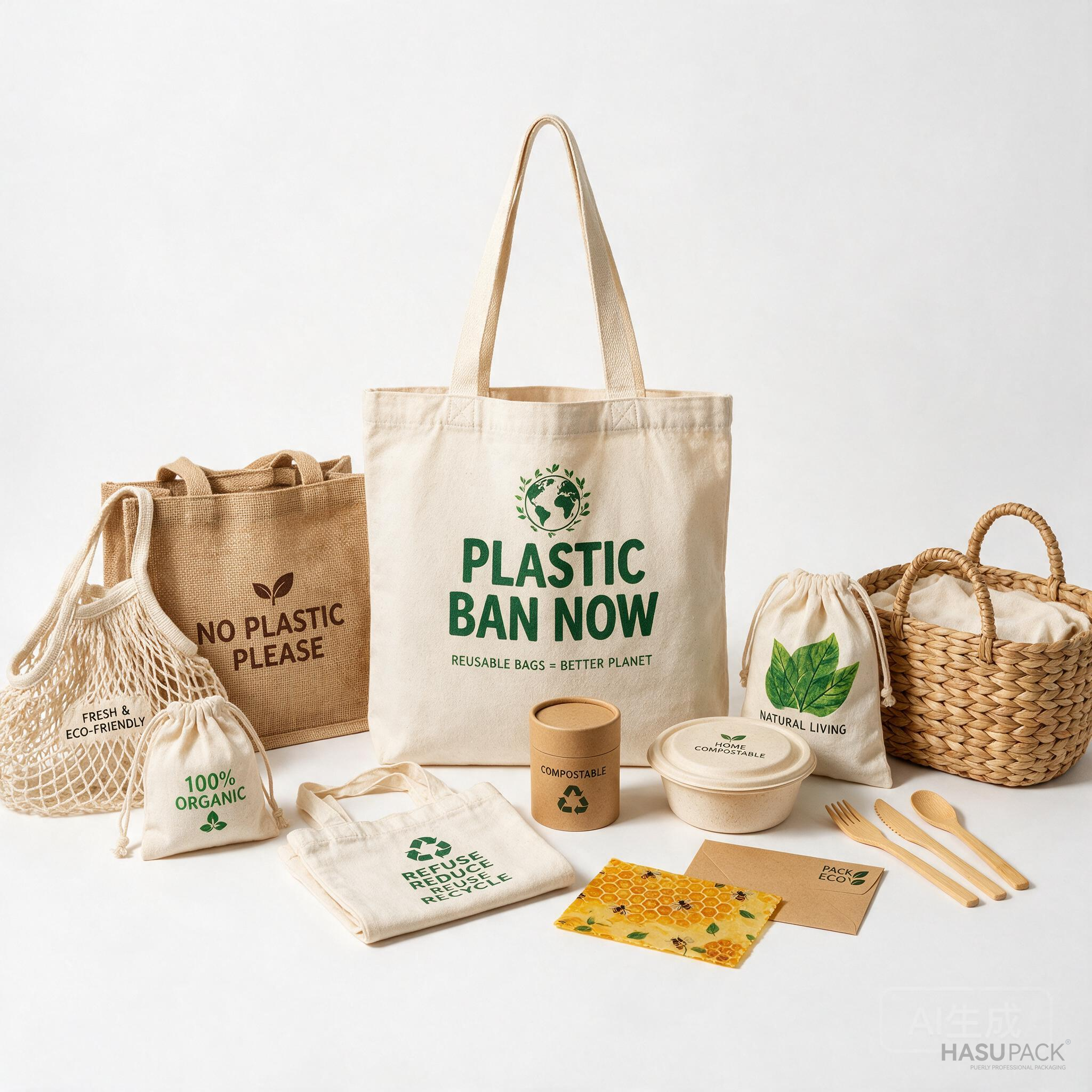
Plastic Bag Restriction Policy Continues to Intensify: Packaging Industry Faces a New Normal
Since the joint release of the “Opinion on Further Strengthening the Governance of Plastic Pollution” by the National Development and Reform Commission and the Ministry of Ecology and Environment in 2020, China’s plastic restriction policy has entered a stage of comprehensive deepening. From 2025 to 2026, multiple provinces and cities across the country have introduced stricter restrictions on plastic products, including non-degradable plastic bags, disposable plastic tableware, and hotel disposable plastic items. Beijing was the first to comprehensively ban non-degradable plastic bags and disposable plastic tableware in the catering takeout sector, followed by first-tier cities such as Shanghai, Guangzhou, and Shenzhen. As a national ecological civilization experimental zone, Hainan Province has already achieved a full island ban on plastic use. For the packaging industry, the plastic restriction policy not only brings compliance pressures but also creates opportunities for product structure adjustment and technological upgrading.
According to statistics from the China Plastics Processing Industry Association, the total production of plastic packaging in China is expected to reach approximately 45 million tons in 2025. About 15% of this volume is directly affected by plastic restriction policies, meaning around 6.75 million tons of plastic packaging products need to be replaced or upgraded. Facing such a significant market transformation, packaging factories need to thoroughly understand the implementation details of policies in different regions and adjust their product lines and production strategies accordingly. There are differences in the enforcement intensity and timing of plastic restriction policies across provinces and cities. First-tier cities have the strictest enforcement, while some smaller cities still have transition periods in place.
Pressure from rising raw material costs
The most direct impact of the plastic restriction policy on packaging factories is a significant increase in raw material costs. Although traditional plastic materials (PE, PP, etc.) remain relatively stable in price, price fluctuations have become more pronounced for certain specifications due to changes in demand. At the same time, the market demand for biodegradable materials (PLA, PBAT, etc.) and recycled plastics (PCR) has surged, leading to persistently high prices. According to industry data, the market price of PLA (polylactic acid) is approximately 1.5 to 2 times that of traditional PE materials, while PBAT prices are about 60 to 80% higher than traditional materials. This cost difference has significantly pressured the profit margins of packaging factories, especially in B2B business, where customers have limited tolerance for price increases. For detailed performance comparisons of different materials, please refer to the following.Packaging Knowledge ColumnMaterial Guide Article
Faced with the pressure of rising raw material costs, packaging factories can explore solutions from multiple dimensions. First, optimize material formulations to reduce the proportion of biodegradable materials while meeting performance requirements. Second, establish partnerships with multiple suppliers to secure better prices through competitive pricing and long-term agreements. Third, improve production efficiency and reduce waste rates to lower unit costs. Fourth, consider introducing recycled materials as a substitute for some virgin materials, achieving cost control while meeting environmental standards. It is worth noting that the price fluctuations of recycled materials are relatively smaller, offering better cost stability.
Trend of Order Structure Changes
The plastic restriction policy is profoundly transforming the order structure in the packaging industry. An increasing number of brand owners are explicitly requiring the use of biodegradable or recyclable materials when purchasing packaging, particularly in the food, daily chemical, e-commerce, and catering delivery sectors. According to industry association survey data, the order volume for biodegradable packaging grew by more than 40% in 2025, while the order volume for traditional non-biodegradable plastic bags has been continuously declining, with an annual decrease of approximately 15-20%. At the same time, demand for single-material recyclable packaging, such as all-PE or all-PP structures, is also growing rapidly. These types of packaging are favored by brand owners due to their ease of recycling.
Changes in order structure require packaging manufacturers to reassess their product portfolio and technical capabilities. It is recommended that factories make adjustments in the following areas: increase production capacity for biodegradable packaging, especially for high-technical-barrier materials such as PLA and PBAT, including bag forming and printing processes; develop single-material recyclable packaging solutions, optimize material composition to meet performance requirements for different application scenarios; enhance the environmental performance of composite packaging by reducing the number of materials used while maintaining barrier properties, making it easier for classification and recycling. For the latest developments in eco-friendly packaging technology, please refer toIndustry News ColumnGet more information.
Factory’s technical upgrade path
Facing the market transformation brought by the plastic restriction policy, technological upgrades for packaging factories are no longer optional but essential. The specific upgrade paths include the following aspects. First, introducing equipment for processing biodegradable materials. The processing performance of PLA and PBAT materials differs significantly from traditional plastics, requiring targeted equipment adjustments or replacements. For example, PLA materials have a narrow heat sealing temperature window, necessitating more precise temperature control systems. Second, developing technical capabilities for single-material packaging solutions, including full PE high barrier solutions and full PP solutions, which present higher technical challenges. For technical details regarding bag type selection, please refer toCustomer Case StudiesWe have practical experience in similar projects, but the market prospects are promising. Third, optimize production processes to reduce energy consumption and waste rate.
In addition to hardware investment, factories should also focus on the cultivation and recruitment of technical talent. The technical barriers for biodegradable materials and single-material packaging are relatively high, requiring professional R&D teams for continuous process optimization. It is recommended that factories collaborate with universities and research institutions to conduct joint technological research and development. At the same time, an efficient internal training system should be established to enhance the technical skills of frontline staff. In terms of quality management, a testing system that meets the characteristics of biodegradable materials should be established to ensure compliance with national standards such as GB/T 38082-2019. Factories that invest in technological upgrades will gain a significant competitive advantage in the future market.
Policy Compliance Considerations
Under the policy of the plastic restriction regulation, compliance management for packaging factories has become increasingly important. The enforcement of the plastic restriction regulation varies significantly across different provinces and cities—Beijing, Shanghai, and Shenzhen have already fully banned non-degradable plastic bags, while some cities in central and western regions are still implementing transitional policies. National standards for biodegradable plastic products clearly specify requirements for biodegradation performance, and factories must ensure their products pass certification tests by qualified third-party testing institutions. Additionally, it is recommended that factories closely monitor updates to the implementation details of the regulations in various provinces and cities and adjust their production and sales strategies accordingly. Notably, some provinces and cities are advancing more stringent environmental packaging standards, including mandatory requirements for the proportion of recycled materials in packaging.