




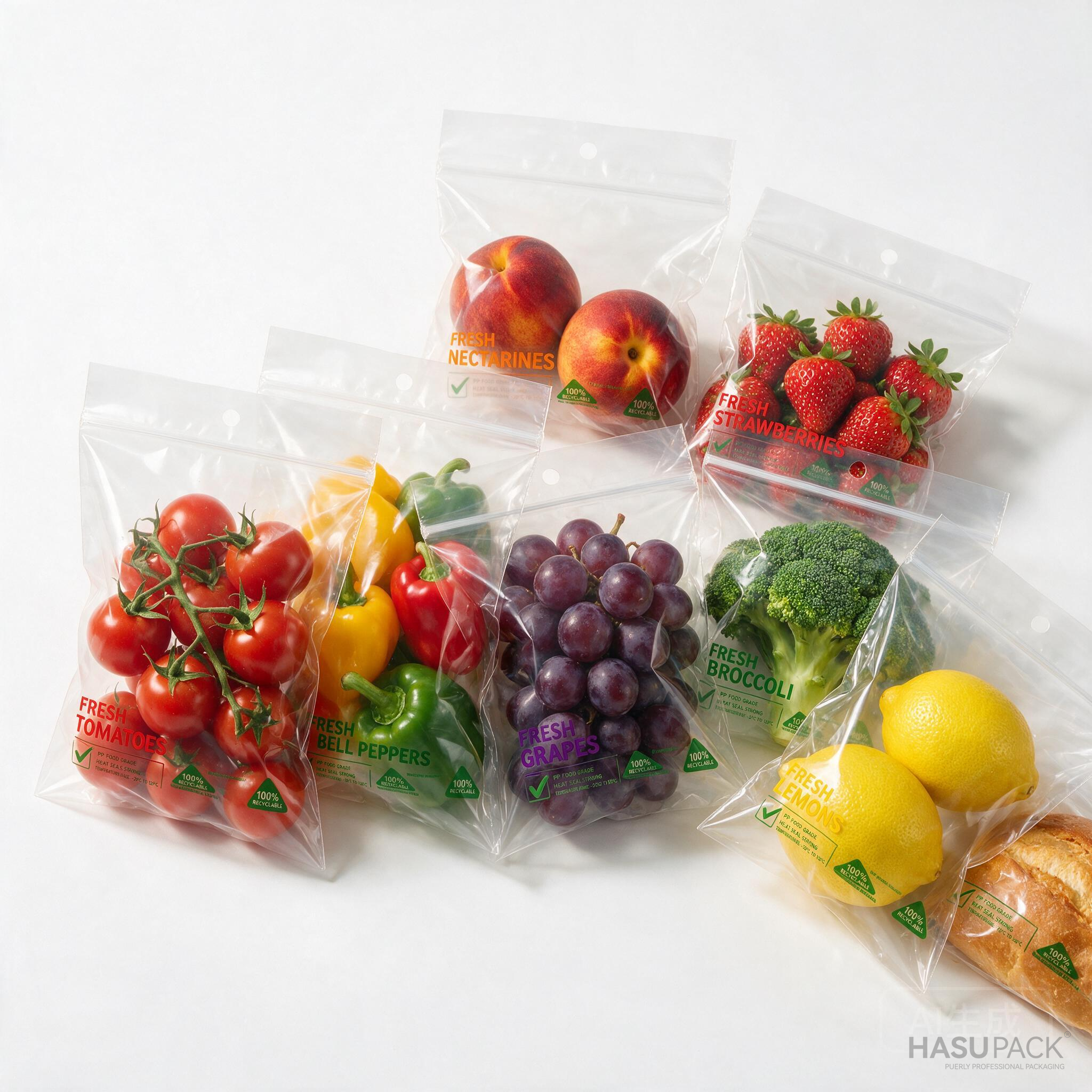
In the food industry, the safety of packaging materials has always been a shared concern between brand owners and consumers. Facing a wide variety of packaging materials on the market—PE, PP, PET, PA, aluminum foil—what is the safest option? As a professional with years of experience in the flexible packaging industry, I won’t beat around the bush today. Let me say it plainly:There is no absolutely safe material, only the safest solution tailored for specific food scenarios.。
I. The Fundamental Logic of Food Packaging Safety: Migration Amount
The core indicator to determine whether a packaging material is safe isMigration (Migration)The amount of substances migrating from the material into food. The national standard GB 4806 series clearly stipulates that the total migration amount of food contact materials shall not exceed 10 mg/dm². Due to differences in molecular structure and additive formulations, different materials exhibit significantly different migration behaviors.
For example,Polyethylene (PE)The material has a simple structure and few additives, making it one of the safest food packaging materials recognized worldwide. It is widely used in food wraps, shopping bags, and inner sealing layers.Polypropylene (PP)High heat resistance makes it suitable for microwave heating and steaming. However, it’s important to note that the safety of the material does not guarantee the safety of the finished product. The real hidden danger lies in the residual solvents in the printing inks and adhesives.
II. Safety Comparison of Five Main Food Packaging Materials
1. PE (Polyethylene) —— Daily packaging safety base 0 1
Polyethylene is produced by the polymerization of ethylene, with a stable molecular structure and no toxic monomers. Food-grade PE film has a very low total migration rate, making it particularly suitable for high-moisture foods. However, PE is not heat-resistant and may deform when exposed to temperatures above 80°C.
2. PP (Polypropylene) —— High-Temperature Scenario Safety Choice
PP melting point is above 160℃ and can withstand high-temperature sterilization at 121℃. It has excellent chemical resistance and is suitable for contact with acidic and alkaline foods. Note: CPP (Cast Polypropylene) is commonly used as the inner layer of composite bags, with safety equivalent to PP.
3. PET (Polyethylene Terephthalate) —— Transparency and Barrier Properties Balance
PET offers excellent transparency and gas barrier properties, making it a primary material for beverage bottles and outer layers of food packaging films. Food-grade PET does not contain harmful plasticizers, but it may release acetaldehyde at high temperatures (above 70°C), so it is not recommended for direct use in holding hot liquids.
4. PA (Polyamide/Nylon) —— Needle-resistant, Invisible Guardian 1
PA is known for its excellent puncture resistance and heat resistance, commonly used in vacuum bags and high-temperature steam sterilization bags. However, PA has strong hygroscopic properties, so it is usually combined with PE or PP.
5. Aluminum Foil (AL) — The King of Barrier Properties
Aluminum foil can almost completely block oxygen, light, and moisture, making it the preferred choice for products with high preservation requirements such as coffee, tea, and powdered milk. However, aluminum foil itself does not seal, requiring a heat-seal layer for use. Once the aluminum foil layer has pinholes, its barrier performance will significantly decrease.
III. Key Factors Affecting Safety: It’s Not Just About Choosing the Right Material
3.1 Additives and Auxiliaries
Plastic raw materials require the addition of antioxidants, UV stabilizers, lubricants, and other additives during processing. The migration risk of these additives is a key focus in safety evaluation. Reputable factories will strictly selectFood-grade additiveAnd control the addition amount.
3.2 Printing Ink
The residual aromatic hydrocarbons and ketones in solvent-based inks pose a significant risk to food safety. It is recommended to chooseBenzene-free and ketone-free inkEither water-based ink or solvent-based ink can be used, and sufficient time for solvent evaporation should be allowed after printing.
3.3 Composite Adhesive
The polyurethane adhesive used in solvent-free lamination processes has extremely high safety after full curing. In contrast, solvent-based lamination processes require strict control of residual solvent concentration.
Four. Factory Practice: How to Ensure Packaging Safety?
As a factory with over a decade of experience in food packaging production,HuaShu PackagingEnsure safety from three dimensions:
- Raw MaterialsAll purchased raw materials are food-grade compliant with national standard GB 4806 and FDA standards, with a certificate of analysis required for each batch.
- Production Process100,000-grade clean workshop, temperature and humidity controlled, solvent residue monitored online throughout the process.
- Finished Product InspectionEach batch undergoes migration testing, solvent residue analysis, and heat seal strength testing, with traceable data.
Food packaging safety is not achieved through a single material but is ensured throughout the entire supply chain, from raw material selection to process control and quality inspection. When customizing packaging, brand owners should not only focus on the material used but also check whether the factory has a comprehensive quality control system in place.
V. Practical Suggestions for Purchasers
If you are looking for a food packaging supplier, it is recommended to focus on the following points:
- Is there a food production license (QS/SC)?This is the basic threshold.
- Is food-grade material used?Please review the FDA or national standard test reports for the raw materials.
- Is the printing process environmentally friendly?It is recommended to choose solvent-free lamination and benzene-free, ketone-free printing.
- Do you provide third-party test reports?Reports issued by authoritative institutions such as SGS and Huace are more convincing.
In summary,PE and PP are the safest and most widely used base materials, while aluminum foil and PA are indispensable in specific high-end applications.The key is not in choosing the most expensive, but in choosing the right one — the best solution that matches product characteristics and usage scenarios.
Want to learn more about food packaging material safety? Welcome to contact us.HuaShu PackagingOur technical team provides you with professional material selection recommendations.