




Freezing food packaging and ambient temperature food packaging both appear as flexible packaging bags, but their selection logic is completely different. We often encounter customers using the structure of an ambient temperature snack bag for frozen dumplings. The sample works fine at room temperature, but after one month in a cold storage warehouse, the sealing edges crack, the bag becomes brittle, and leakage occurs after thawing. The issue is not with the printing, but with the failure to consider materials, structure, and acceptance standards as separate factors.
This article clearly explains the differences between frozen food packaging and ambient temperature food packaging based on real usage scenarios, helping you determine the direction before placing an inquiry.
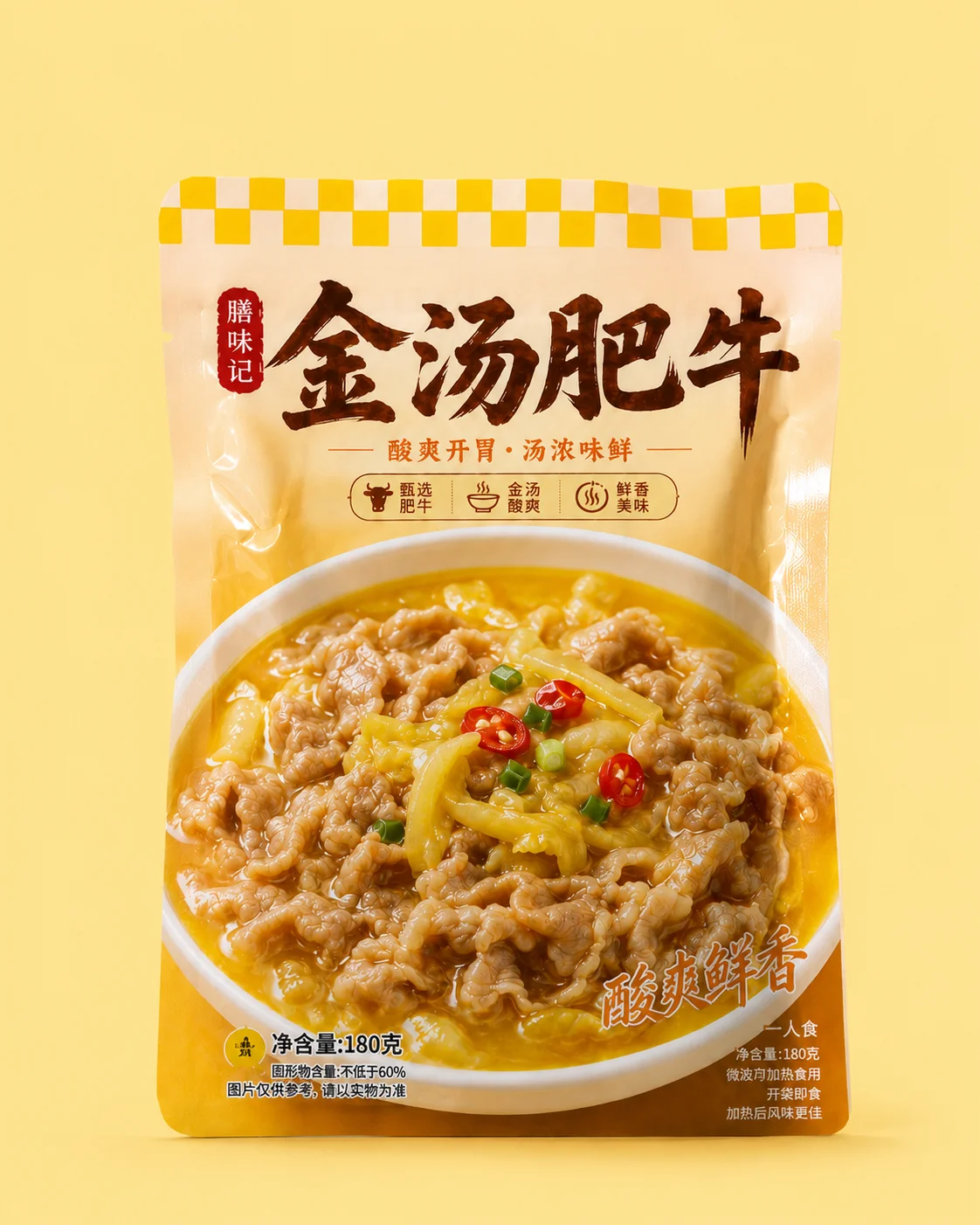
First, distinguish the two types of products based on their failure mechanisms.
The main threats to packaging for ambient temperature food are oxygen, moisture, and light, so the focus is on whether the barrier layer is thick enough and whether the light-blocking design is effective. Frozen food packaging, however, faces a different set of challenges: low temperatures can reduce the flexibility of the film, and below -18°C, ordinary PE layers become noticeably brittle. During transportation, frozen products also collide and stack, requiring the bag to withstand ice crystal punctures and impact from drops.
The conclusion is straightforward: for frozen food packaging, the top priority is low-temperature flexibility and puncture resistance; for ambient temperature food packaging, the top priority is barrier properties and light blocking. Getting the order wrong leads to wasted costs and poor results.
II. Material Selection: Consider Low-Temperature Resistance and Barrier Properties Separately
Common Structures for Frozen Food Packaging
The standard solution is PET/PE or PA/PE. The PA nylon layer offers significantly better low-temperature impact strength and puncture resistance compared to regular PET. In deep cold environments such as -30℃ or even -40℃, the PA layer is essential for maintaining performance. For the inner heat-seal layer, it is recommended to choose a low-temperature heat-seal PE, as it has a lower sealing temperature and is less likely to damage the film during bag-making.
Common Structures for Ambient Temperature Food Packaging
Packaging for ambient temperature food commonly uses PET/AL/PE, PET/VMPET/PE, or paper composite structures. The key is barrier protection: choose aluminum foil or metallized layers for products prone to oxidation, and add a separate moisture barrier for those sensitive to humidity. Relevant practices can be referenced accordingly.Detailed Explanation of Moisture-Proof Packaging Materials。
III. Structural Design: Three Often Overlooked Aspects of Freezer Bags
First is the sealing width. The sealing edge for frozen food packaging is typically 2 to 3 millimeters wider than that for normal temperature bags, as the heat-sealing layer becomes less fluid at low temperatures, and a narrow sealing edge can easily create leakage channels. Second is puncture resistance. For products with bones, shells, or sharp edges, the inner layer should be thickened or a co-extruded film should be used. Third is stacking and drop resistance. After frozen products are packed, the overall weight is large, so the bag design should avoid sharp corners to prevent bag rupture, which often occurs at the corners.
Four. Key Points for Ambient Food Packaging: Light Protection and Oxidation Control
Room temperature storage means a longer shelf life, typically 6 to 12 months. During this period, oxygen permeation and light aging are the main risks. The packaging structure should be determined by working backward from the shelf life to ensure the appropriate barrier level, rather than simply copying competitors’ designs. If the product is sensitive to color and flavor, the use of oxygen absorbers or nitrogen flushing should also be considered.
V. Cost and Common Errors
Switching from regular bags to frozen bags may seem like a cost-saving measure, but it actually transfers risk to after-sales service: once the end user experiences bag rupture or leakage, the compensation and return costs far exceed the saved material difference. Conversely, using high-barrier aluminum foil structures for short-term frozen products is also a clear waste.
The three most common mistakes are: conducting only room temperature testing without low-temperature testing upon release; neglecting the sealing performance after thawing; and failing to confirm the drop impact data of the packaging at -18℃.
Six. Recommended Acceptance Methods
Recommended testing for frozen food packaging includes at least three tests: -18℃ low-temperature drop test, edge seal strength low-temperature test, and leakage check after freeze-thaw cycles. For normal temperature food packaging, the focus should be on migration testing and accelerated shelf life testing. Bag type can also be referred to for additional guidance.How to Choose Low-Temperature Freezing Packaging BagsStructural recommendations.
Seven. Clarify your requirements before placing an inquiry.
Prepare the following information for a more accurate quote: product form (dry or wet, with or without bones or sharp edges), storage temperature and duration, single package weight after bagging, transportation method, and whether full-color printing is required.
There is no hierarchy between frozen food packaging and ambient temperature food packaging; it’s all about suitability. If you are choosing packaging for frozen or ambient products, welcome.Contact UsPlease send the product details, and we will provide structural recommendations based on real usage scenarios; you can also check out Ouma Packaging first.https://www.omopack.cnUnderstand the packaging concepts of similar products.