Company News

Bag Making Process Explained: How to Form Three-Side Sealing, Four-Side Sealing, and Eight-Side Sealing Bags

In the soft packaging production chain, the bag-making process is the final step that determines the appearance, sealing reliability, and user experience of the finished product. The same roll of composite film can become three-sided sealed bags, four-sided sealed bags, or eight-sided sealed bags through different slitting, heat sealing, and forming methods, resulting in significant differences in performance and application scenarios. This article, from the perspective of factory frontline operations, clearly explains the principles, key parameters, and forming methods of…
Complete Guide to Custom Packaging Process: Essential Reading for First-Time Factory Customization

First time working with a factory for custom packaging? The biggest fear isn't the price, but the lack of transparency in the process: unclear quotes, repeated sample revisions, and discrepancies between samples and mass production. In reality, the packaging customization process isn't mysterious. Breaking it down into five stages—clarifying requirements, inquiry and sample making, order confirmation, mass production, and acceptance and delivery—allows you to focus on key points in each stage. Even if you're new to customization, you can ensure…

How to Choose Anti-Static Packaging Bags? A Guide to Electrostatic Protection for Electronic Packaging

In the production, storage, and transportation of electronic products, static electricity is a "hidden killer" that is invisible to the eye but highly destructive. Walking normally on a carpet can cause a person's body to accumulate static electricity of several thousand volts, while the breakdown threshold of a regular MOS chip is often only dozens of volts. Providing suitable anti-static packaging bags for circuit boards, chips, sensors, and other sensitive components is the most fundamental and critical defense in electronic…

How to Choose Between a Bellows Bag and a Side Bellows Bag? Analysis of the Packaging Bag Type with the Highest Space Utilization

Walking through supermarkets and specialty snack shops, packaging bags that can "stand up" on their own are becoming more common on shelves: coffee beans, tea, nuts, and freeze-dried snacks are increasingly using gusset bags. Although both are flexible packaging, gusset bags create a three-dimensional volume through gusset folds on the sides or bottom, allowing them to be filled to capacity and arranged neatly. Compared to flat three-side-sealed bags, gusset bags convey a higher sense of quality. This article cuts straight…

How to Choose Low-Temperature Freezing Packaging Bags? A Comprehensive Guide to -18℃ Frozen Food Packaging Solutions

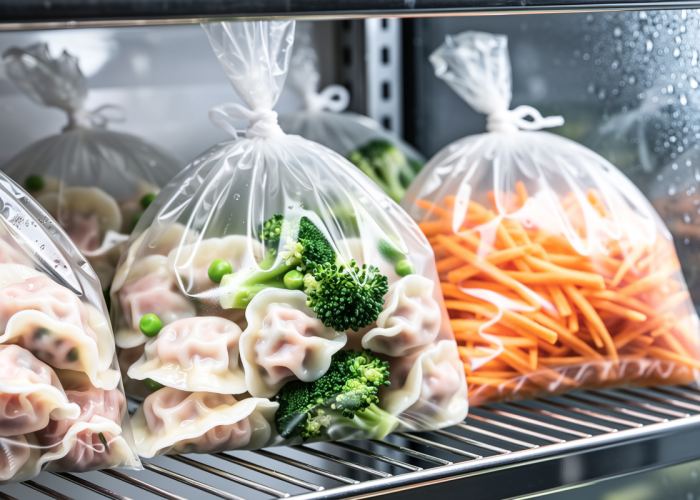
Low-temperature frozen packaging bags are essential protective materials in the circulation of frozen food. Products such as quick-frozen dumplings, frozen seafood, ice cream, and pre-prepared meals all start from factory cold storage, go through cold chain transportation, display cases in supermarkets, and finally reach home refrigerators. The entire process relies on a reliable low-temperature frozen packaging bag. Choosing the wrong packaging can lead to issues such as moisture loss and deterioration in taste, and in severe cases, freezing burn and…

Difference Between Stand-Up Bags and Regular Bags: A Comprehensive Analysis of Structure, Cost, and Applicable Scenarios

When launching a brand for food, pet treats, or personal care products, almost every first-time sample request will ask the same question: what's the difference between a stand-up pouch and a regular pouch, and which one should I choose for my product? At first glance, the difference seems to be just whether the pouch can stand upright on its own. In reality, there are systematic differences in bottom structure, material usage, and production costs. Choosing the wrong type can lead…

How to Choose Medical Device Packaging Bags? Detailed Explanation of Special Requirements for Sterile Packaging

Medical device packaging bags are the first line of defense in ensuring the sterility of medical devices. Unlike ordinary food packaging bags, medical device packaging bags must meet multiple stringent requirements including sterile barrier, microbial barrier, sterilization compatibility, and fiber-free peelability. Any failure to meet these standards may result in product contamination before clinical use. In recent years, with the implementation of the domestic medical device registration system and the tightening of hospital infection control management, more and more manufacturers…

Flexographic Printing Explained: Opportunities and Limitations of Flexography in the Context of Environmental Trends

Flexographic printing is one of the most widely used printing methods in the flexible packaging industry. It uses flexible photopolymer plates and an anilox roller to meter the ink, combined with water-based or UV inks to complete the printing process. Compared to gravure printing, flexographic printing offers significant advantages in terms of environmental friendliness, changeover speed, and overall cost. If you want to systematically understand the differences between various printing methods, you can first read our complete guide to packaging…

How long is the typical lead time for packaging factory orders? 7 practical methods to shorten delivery time

Many buyers' first question when inquiring about pricing is: How long is the typical lead time for a packaging factory? There is no single answer to the lead time of a packaging factory; it is determined by various factors such as the availability of raw materials, the status of printing, lamination, bag making, and the production scheduling order. If your brand is planning for custom packaging, it is recommended to first understand the entire process of soft packaging customization, and…