


Company News

Digital Printing Packaging: The Revolution of Small-Batch Customization

Digital Print Packaging: The Revolution of Small-Batch Customization When brand owners are still struggling with the high minimum order quantities of traditional printing, digital print packaging is changing the game. With features such as no plate-making required, low minimum order quantity, and fast delivery, digital print packaging has become the preferred solution for small-batch customization and market testing. This article analyzes how digital print packaging helps brands quickly iterate packaging solutions from three dimensions: cost, quality, and applicable scenarios. What…
EFSA EU Food Grade Certification: What’s the Difference from FDA?

EFSA EU Food Grade Certification: What's the Difference from FDA Food packaging companies exporting to Europe will almost inevitably encounter the topic of EFSA EU Food Grade Certification. Many people confuse it with FDA certification, but in fact, there are significant differences between the two in terms of regulatory systems, evaluation processes, and scope of application. This article provides a systematic comparison from a factory operational perspective, highlighting the differences between EFSA EU Food Grade Certification and FDA Certification, helping…

How to assess the quality level of a packaging factory? Factory inspection checklist

How to Assess the Quality Level of a Packaging Factory? Factory Inspection Checklist When purchasing packaging bags, many buyers judge a factory's quality based on only two criteria: price and sample appearance. However, when mass production begins, various issues such as color differences, leakage, uneven thickness, and delayed delivery arise, revealing that the wrong factory was chosen. How can you assess the quality level of a packaging factory? Simply looking at samples is not enough. The most reliable method is…

BRC Packaging Certification Explained: Why Big Brands Require Suppliers to Have BRC

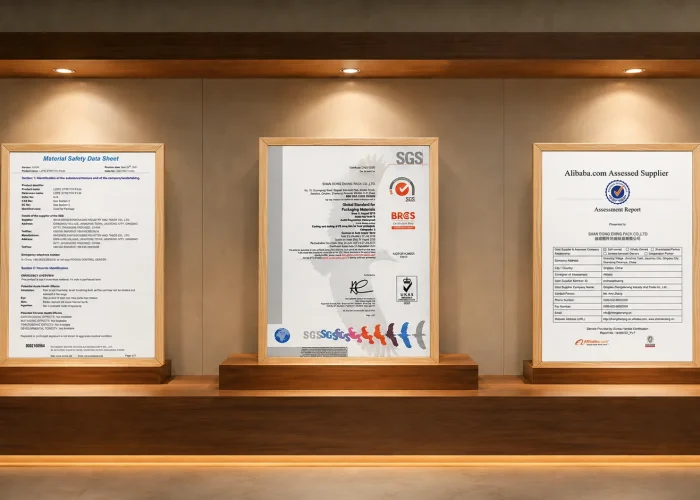
BRC Packaging Certification Explained: Why Big Brands Require Suppliers to Have BRC People involved in the food packaging business have almost all encountered this scenario: when a client sends out a supplier audit checklist, the first item is whether the supplier has BRC packaging certification. Without this certificate, even the quotation stage is inaccessible. What exactly is BRC packaging certification? What preparations are needed for a factory to obtain it? This article, from the perspective of a factory practitioner, clearly…

Why are the quotations from the same packaging bag manufacturer so different?

Why Do Quotes from the Same Packaging Bag Manufacturer Vary So Much? When purchasing packaging bags, many customers face the same confusion: holding almost identical specifications and asking three manufacturers for quotes, the prices can differ by 30% or even double. Why do quotes for the same packaging bag vary so much? As a flexible packaging factory, we want to say that the differences in quotes are often not just tricks, but real differences in materials, processes, minimum order quantities,…

Why is light-proof packaging important? How much damage can ultraviolet light cause to food?

Why is light-blocking packaging important? How much damage does UV light cause to food Many food companies focus on sealing and moisture protection when designing packaging, often overlooking light as a hidden threat. Light-blocking packaging bags are specifically designed to address this issue: they use structures such as aluminum foil, metallized layers, or light-blocking inks to block UV light from reaching the contents, protecting the color, aroma, taste, and nutritional value of the product. This article explains from a factory…

Composite Packaging Process Explained: Why Use Composite? What Does Each Layer Do

Composite Packaging Process Explained: Why Composite? What Each Layer Does Composite packaging is one of the most core processes in the flexible packaging industry. Potato chip bags, coffee bags, and sterilized bags on supermarket shelves are almost all made by bonding two or more layers of film together through the composite process. Many people wonder: why not just use a single thick plastic layer? Why go through the trouble of multi-layer composites? This article will explain the principles of composite…

How to Save Costs on Packaging Printing? 5 Cost-Saving Methods That Don’t Affect Quality

How to Save Costs on Packaging Printing? 5 Cost-Saving Methods That Don't Affect Quality How to save costs on packaging printing is a question every packaging buyer must face. In the field of flexible packaging, the printing process typically accounts for 20% to 35% of the total packaging cost. Expenses such as plate fees, ink, electricity, labor, and waste—all add up to significant costs. As a flexible packaging factory with years of production experience, we help our customers calculate these…

What Does a Carbon Footprint Label Mean for the Packaging Industry? A Corporate Response Guide

What Does a Carbon Footprint Label Mean for the Packaging Industry? A Corporate Response Guide As carbon footprint labels increasingly appear on packaging for food and personal care products, many packaging buyers are beginning to realize: this is no longer a distant environmental concept, but an imminent business reality. A carbon footprint label records the greenhouse gas emissions throughout a product's entire lifecycle, from raw material sourcing, production and processing to transportation and sales. It is reshaping consumer choices, brand…