




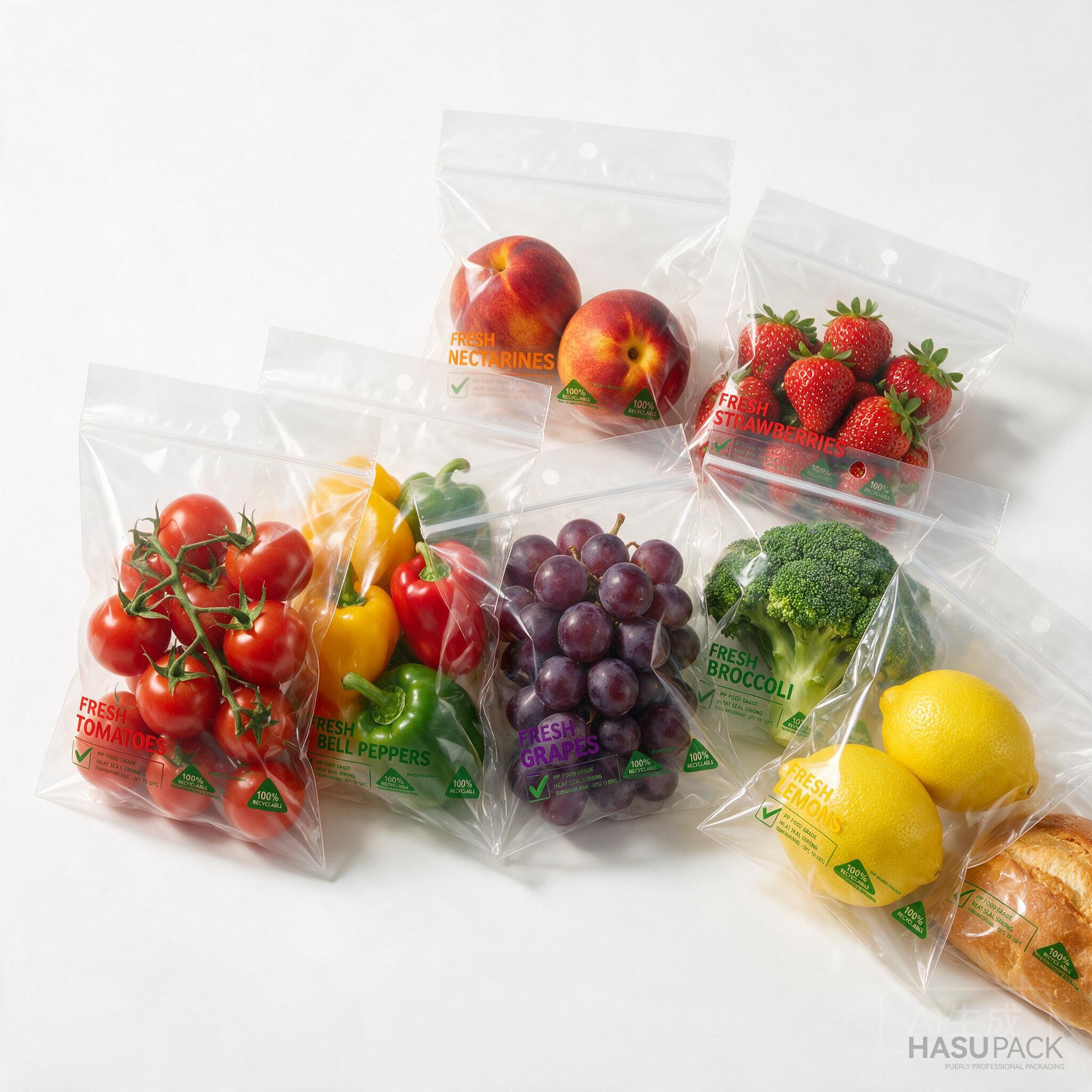
PP Bag Explained: Why It Is the Versatile Choice for Food Packaging
Polypropylene (PP) bags are the second most commonly used general-purpose plastic packaging product in the food packaging industry, following polyethylene (PE) bags. Made from polypropylene, PP bags are renowned for their excellent heat resistance, good transparency, and superior barrier properties. They play an irreplaceable role in packaging microwaveable foods, high-temperature sterilized foods, and ready-to-eat products. This article will provide an in-depth analysis of the material properties, core advantages, and application scenarios of PP bags.
Core material of PP bags: characteristics of polypropylene
Polypropylene (PP), also known as polypropylene, is a thermoplastic resin produced by the polymerization of propylene monomers. Based on differences in molecular chain structure, PP can be classified into two main types: homopolymer polypropylene (PP-H) and copolymer polypropylene (PP-C). Homopolymer PP has good rigidity and high hardness, making it suitable for packaging containers requiring stiffness. Copolymer PP offers higher impact strength and better low-temperature performance, making it more suitable for flexible packaging bags. The density of PP material is approximately 0.90-0.91 g/cm³, making it one of the lightest common plastics. This characteristic provides significant cost advantages for PP bags in transportation and storage.
Core Differences Between PP Bags and PE Bags
PP bags and PE bags, although both belong to the polyolefin plastics, have significant differences in performance. PP bags can withstand temperatures above 121°C, making them suitable for microwave heating and high-temperature sterilization. In contrast, the heat resistance of PE bags is usually no more than 90°C. PP bags offer better transparency and gloss, resulting in superior shelf display effects. PP bags have higher rigidity and stiffness, allowing the packaging bags to maintain a good shape, making them suitable for self-standing bags and other bag types requiring structural support. However, PP bags have poorer low-temperature performance and are prone to becoming brittle in environments below 0°C, therefore they are not suitable for use in cold storage or freezing conditions.HuaShu PackagingIn actual material selection, PE material is generally recommended for frozen food packaging rather than PP material.
Main Applications of PP Bags in Food Packaging
PP bags have a wide range of applications. The most common uses include packaging for ready-to-eat rice and frozen food that is heated in a microwave oven, utilizing PP’s heat resistance for one-step heating from the refrigerator to the microwave; cup lids and straw packaging for milk tea and beverages, where PP’s transparency and rigidity ensure a good consumer experience; and inner packaging bags for baked goods, where PP’s moisture-proof and oil-resistant properties are ideal for oily foods like bread and cakes. Additionally, PP material is extensively used as the inner layer heat-sealing material for high-temperature steam sterilization bags. When combined with PA or PET, it can withstand a high-temperature sterilization process of 121°C.
Advantages of PP Bags for Hot Food Packaging
Thermally sealed packaging is one of the most advantageous applications for PP bags. Traditional PE bags tend to soften and deform when exposed to hot food above 60°C, whereas PP bags can easily withstand the temperature of freshly cooked food. PP material also exhibits better resistance to oils compared to PE, preventing swelling or degradation when in contact with oily foods. Additionally, PP bags offer excellent moisture vapor barrier properties, effectively preserving the moisture and texture of hot food. For chain restaurant brands’ pre-prepared meals and takeout packaging, PP bags are one of the ideal choices.
Guide to Choosing PP Bags
When selecting PP bags, several key factors should be given priority. First, the food-grade certification of the material is essential. Qualified PP bags should pass food contact material testing and meet the GB 4806.7 standard. Second, the thickness and dimensions of the bag should be matched to the specific product requirements. Third, the print quality is important. Due to the low surface energy of PP material, it needs to undergo corona treatment to achieve good print adhesion. Fourth, the sealing strength should be considered. The heat sealing temperature for PP is higher than that for PE, requiring specialized equipment and process parameters to ensure a secure seal. For more information on selecting packaging bags, you may refer to the following resources.PE Bag Complete GuideThe relevant content in the text.
The Environmental Trend of PP Bags
PP bags have a natural advantage in terms of environmental protection. Like PE, PP is a single-material plastic that can be recycled through existing recycling systems. When recycled, PP is classified as plastic No. 5. After recycling and reprocessing, it can be turned into recycled PP pellets, which are used to manufacture packaging products for non-food contact applications or industrial products. In recent years, the industry has strongly promoted single-PP packaging solutions, replacing traditional multi-layer heterogeneous composite structures with fully PP structures. This approach maintains barrier properties while achieving 100% recyclability. At the same time, bio-based PP, derived from renewable resources such as sugarcane, has begun to be applied in high-end packaging.
PP bags hold a significant position in the food packaging industry due to their unique performance advantages. If you are looking for packaging solutions for hot foods, baked goods, or products requiring microwave heating, PP bags are undoubtedly a top consideration. Welcome to explore our products.Contact Huashu PackagingGet professional packaging consulting services. You can also visit the official Chinese website of Omopack at omopack.cn to explore a wider range of packaging products.