




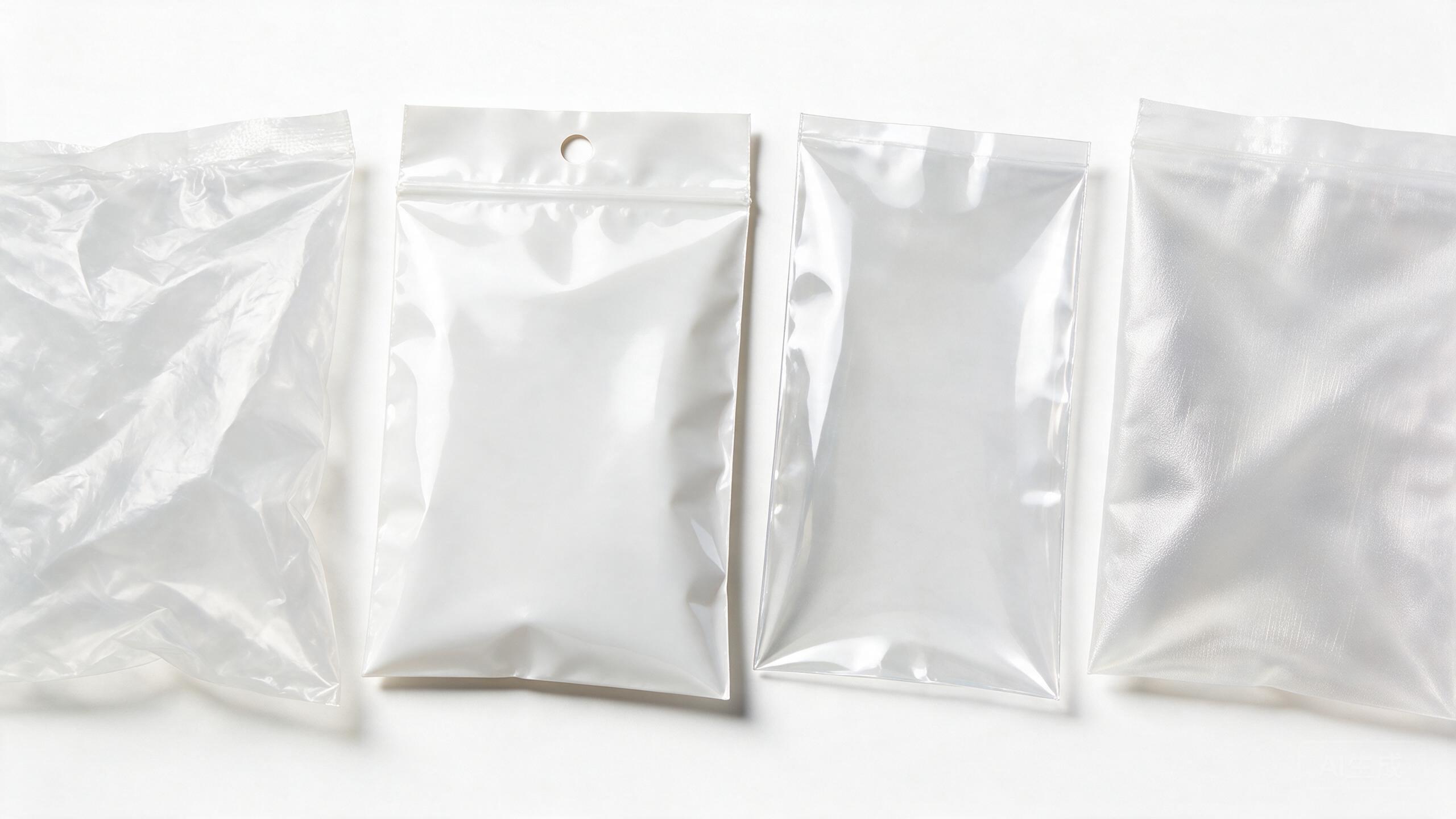
Why is choosing the right packaging material so important?
In the packaging procurement process, the first and most confusing question you’ll encounter is: which material should be chosen for plastic packaging bags? PE, PP, PET, PA (nylon)… These professional terms sound similar, but their performance characteristics differ greatly. Choosing the wrong material can lead to packaging damage, inadequate barrier properties causing product spoilage, or unnecessary cost increases. Refer to our guidelines for selection.Food Packaging Bag Material ComparisonLearn more about material selection details. This article will help you clearly understand the characteristics and application scenarios of several mainstream plastic packaging materials all at once.
PE (Polyethylene) — the most commonly used general-purpose packaging material
Polyethylene is the most produced type of plastic, commonly available in two forms: LDPE (low-density polyethylene) and HDPE (high-density polyethylene).
LDPE: Soft and transparent, suitable for light packaging
LDPE feels soft and has high transparency with good heat-sealing properties. It is commonly used for garment bags, food preservation bags, and packaging for daily necessities. Its disadvantages include low tensile strength and heat resistance, making it unsuitable for heavy loads or high-temperature environments.
HDPE: High hardness, suitable for heavy-duty packaging
HDPE is harder and more abrasion-resistant than LDPE, commonly used in shopping bags, garbage bags, shampoo bottles, and other applications. It has a semi-transparent appearance, a brittle feel, and good tear strength, making it the preferred choice for low-cost load-bearing packaging.
PP (Polypropylene) — Preferred for High Heat Resistance and High Transparency
Polypropylene’s outstanding advantage is its excellent heat resistance, with a melting point above 160°C, making it suitable for high-temperature steam sterilization. It also has high transparency and good gloss, making it widely used in food packaging.
BOPP (biaxially oriented polypropylene) is a PP film that has been stretched, offering excellent transparency and is commonly used as the outer layer material for printed composite films, snack bags, and candy packaging. Note that PP has poor impact resistance at low temperatures and tends to become brittle.
PET (Polyester) —— High barrier, high strength star material
PET offers excellent mechanical strength and barrier properties, significantly outperforming PE and PP in terms of oxygen and water vapor barrier capabilities. PET film has high transparency and good chemical resistance, making it widely used in beverage bottles, food packaging composite films, and electronic product packaging.
In composite packaging, PET is typically used as the outer layer, providing mechanical support and printability, while the inner layer of PE or CPP ensures heat sealing. Aluminized PET (VMPET) also offers excellent light blocking and moisture barrier properties.
PA (Nylon) – The leader in puncture resistance and oil resistance
Nylon film is most notable for its excellent puncture resistance, making it ideal for packaging products with sharp edges, such as bones and frozen seafood. It also has good oil resistance, making it a commonly used material for packaging oily foods, such as nuts, cured meats, and fried foods.
Common nylon types include PA6 and PA66, but nylon material is relatively costly and its use should be balanced based on product characteristics. In composite structures, PA is typically used as an intermediate layer to provide puncture resistance.
Common Composite Structure Quick Reference Table
In actual packaging, few single-material structures are used; instead, more composite structures are adopted to leverage the advantages of each material:
- PET/PEGeneral food packaging with both barrier properties and heat-sealability
- BOPP/CPPSnack bag, high transparency, low cost
- PA/PEFrozen food, oily food, puncture-resistant, oil-resistant
- PET/AL/PEVacuum packaging, high-temperature sterilization bag, aluminum foil layer provides ultimate barrier protection
- PE/EVOH/PEHigh barrier fresh-keeping packaging, EVOH has excellent oxygen barrier properties
How to quickly choose packaging materials?
When selecting materials, ask yourself four questions:
- Does the product have any sharp edges or corners?Consider composite structures containing PA if applicable.
- Is high-temperature sterilization required?Select PP or heat-resistant structure with PET if required.
- Is it sensitive to oxygen/water vapor?Choose PET/AL/EVOH composite for sensitive products
- On a budget?PE or BOPP/CPP is a cost-effective choice
If you’re still unsure, it’s recommended to contact a professional packaging supplier directly. An experienced packaging manufacturer can recommend the most suitable material solution based on your product characteristics, storage conditions, and transportation methods.
Summary
Understanding the characteristics of different plastic packaging materials is the first step in effective packaging planning. PE offers high cost-effectiveness, PP provides good heat resistance, PET has strong barrier properties, and PA is resistant to punctures—each has its own advantages. In practical applications, through composite structures, we can achieve comprehensive performance that single materials cannot achieve.
Have questions about packaging material selection? Welcome to our support.Contact Huashu PackagingOr visit our Om Packaging official website, where we offer one-stop services from material selection to finished product manufacturing, providing you with professional packaging planning advice for free.