




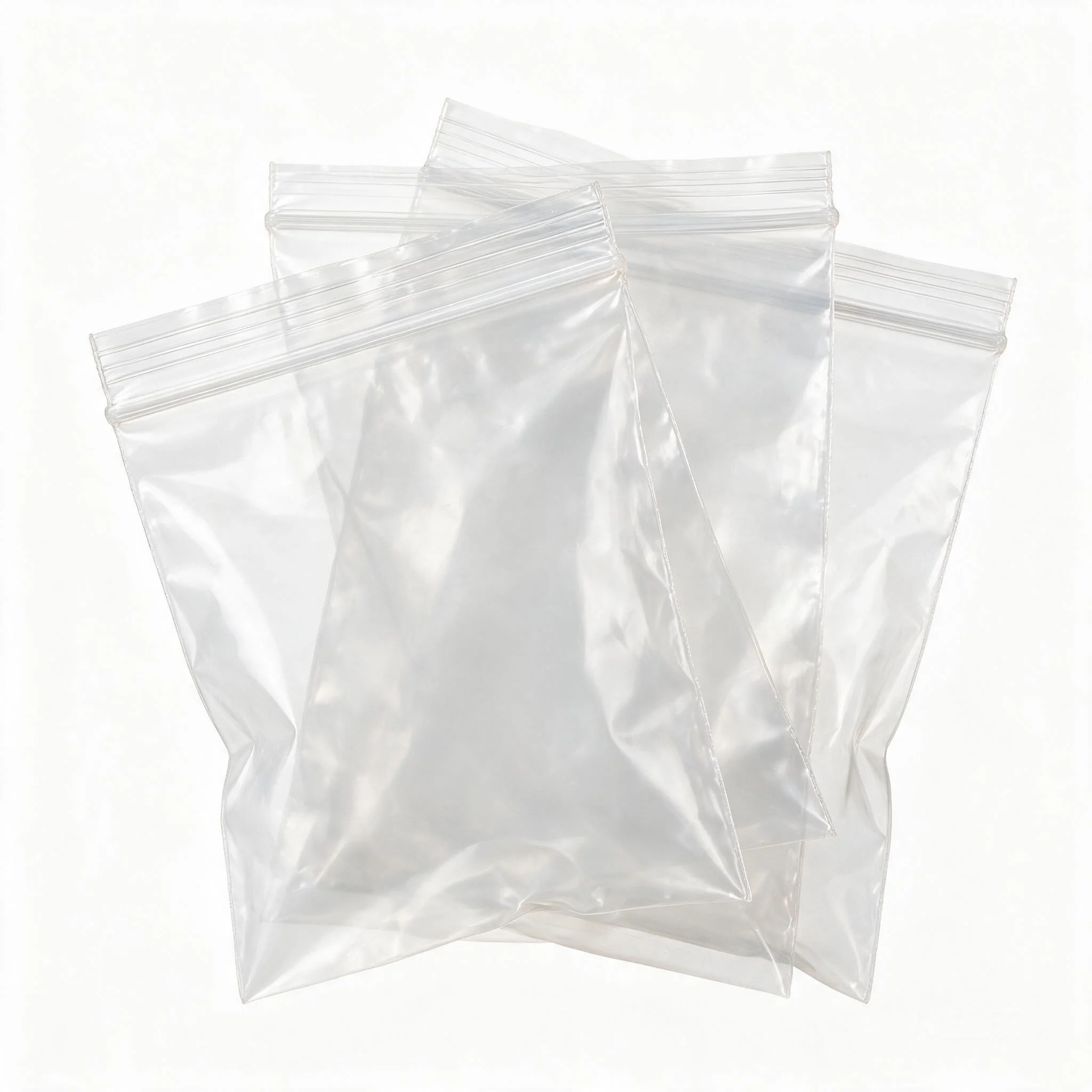
Snack storage, dry goods packaging, and organizing small items—self-sealing bags and sealing bags are commonly used in our daily lives. However, many people are confused: are self-sealing bags and zipper bags the same thing? Can sealing bags be reused? Is the sealing performance of self-sealing bags really reliable? This article will help you clearly understand the differences between self-sealing bags, sealing bags, and zipper bags, as well as their respective applications.
What is a self-sealing bag?
A self-sealing bag (also known as a ziplock bag or a clasp bag) is a type of plastic packaging with a raised and recessed sealing strip at the opening. Users can seal the bag by pressing the strip together with their fingers from one end to the other. To open, simply pull the sides of the bag outward, separating the sealing strip.
The sealing principle of a self-sealing bag is physical interlocking, requiring no heat sealing equipment, no adhesive, and no zipper slider. Its core component is the zipper-like structure at the bag opening — a combination of a raised strip and a recessed strip. This structure determines the sealing strength and service life of the self-sealing bag.
The most commonly used materials for self-sealing bags are LDPE (low-density polyethylene) or LLDPE (linear low-density polyethylene). These materials are flexible, highly transparent, and have good toughness, making them suitable for producing thin self-sealing bags. For detailed information on common packaging materials, please refer toPlastic Packaging Bag Material Selection GuideFood-grade self-sealing bags are typically made from food-grade LDPE material and comply with the GB 4806.7 food safety standard.
What is a zipper bag?
A zipper bag is a type of packaging bag with a sliding zipper head at the opening. The opening and closing of the bag is achieved by sliding the zipper head, similar to the zipper on our clothing. The sealing structure of a zipper bag is more complex than that of a self-sealing bag: there are two rows of interlocking teeth inside the zipper head, and as the zipper head slides, these teeth are forced together or apart.
Zip lock bags typically use composite materials such as PET/PE or PA/PE composites rather than single-layer PE film. This composite structure provides the bags with higher strength, better barrier properties, and a more rigid appearance. The zipper heads are usually made of HDPE or PP, offering a more solid feel.
Ziplock bags are commonly used in scenarios such as high-end food packaging, frozen food packaging, large-packaged snacks, clothing storage, and electronic product packaging. Due to the presence of the zipper head, ziplock bags are significantly more expensive than self-sealing bags.
Top 5 Differences Between Self-Sealing Bags and Zipper Bags
1. Different sealing principles
Self-sealing bags achieve sealing through the pressure of the raised and recessed strips on both sides of the bag mouth, equivalent to line sealing. Zipper bags achieve sealing by the engagement of the zipper teeth via the zipper head, equivalent to point + line sealing. As the zipper head slides, each tooth engages sequentially, resulting in higher sealing precision.
2. Seal Strength Variation
After repeated opening and closing, the elasticity of the PE material in self-sealing bags gradually decreases, the biting force of the raised and recessed strip weakens, making it prone to issues such as air leakage or automatic popping. In contrast, the zipper head of a zipper bag is pressed more tightly, with a stronger interlocking structure, making it less likely to fail even in freezing conditions (-18℃). Generally, the sealing strength of a zipper bag is about 2 to 3 times that of a self-sealing bag.
3. Cost Differences
Self-sealing bags have very low manufacturing costs. A standard-sized self-sealing bag (20×30 cm) costs just a few cents. Zipper bags, due to the added cost of zipper heads and composite materials, are approximately 3 to 5 times more expensive than self-sealing bags. Of course, the unit price decreases with large-scale customization, but the structure of zipper bags makes it difficult for them to be as inexpensive as self-sealing bags.
4. Different application scenarios
Self-sealing bags are suitable for scenarios with less extreme sealing requirements, such as storing dry goods, portioning small items, organizing documents, packaging small e-commerce parcels, and one-time packaging. Ziplock bags are suitable for freezing food, packaging liquid or semi-liquid foods (such as jams and soups), protecting valuable items from moisture, and daily use scenarios that require frequent opening and closing.
5. Differences in User Experience
Self-sealing bags are easy to open but require even finger pressure to close properly. If the bag opening is too long or the material is too stiff, the closure may not seal tightly. Zipper bags use a zipper slider for closure, offering a more effortless and consistent opening and closing experience. However, if the zipper slider is damaged (such as misaligned teeth or detachment), the entire bag becomes unusable.
Are self-sealing bags and sealing bags the same thing?
Strictly speaking, “sealable bag” is a general term referring to any bag that can seal its opening. However, most commonly available “sealable bags” on the market are actually self-sealing bags. Some brands may label their products as “sealable bags” when they are actually self-sealing bags, which is not illegal, as self-sealing bags do have basic sealing functions.
However, note that self-sealing bags are not the same as vacuum-sealed bags. Self-sealing bags can only prevent granular materials from leaking and offer mild moisture resistance, but they cannot effectively block air for a long time. If you need true vacuum preservation (such as long-term storage of coffee beans or nuts), choose specialized packaging with an exhaust valve or vacuum-sealed bags.
How to choose? A table tells you everything.
| Application Scenarios | Recommended Bag Type | Cause |
|---|---|---|
| Dry Goods / Snack Short-Term Storage | Self-sealing bag | Low cost, sufficient for use |
| Frozen Meat/Fish and Seafood | Zipper Bag | Well-sealed, low-temperature resistant |
| E-commerce Small Merchandise Packaging | Self-sealing bag | Low cost, convenient |
| Electronics Moisture Protection | Zipper Bag | Reliable sealing |
| Long-term food storage | Zipper Bag + Vacuum | Optimal barrier properties |
| Office Document Storage | Self-sealing bag | Clear, affordable |
Summary
Self-sealing bags and zipper bags each have their own advantages and suitable applications. Self-sealing bags excel in cost-effectiveness and convenience, making them ideal for daily use and single-use packaging scenarios. Zipper bags offer superior sealing strength and a better user experience, making them suitable for long-term food storage and repeated opening and closing. When choosing, it’s not about pursuing perfection, but finding the most suitable option—based on product characteristics, budget, and usage habits.
Have questions about custom self-sealing bags or zipper bags? Welcome to contact Huashu Packaging, visit Contact Us